
Pipe flanges come in eight common types: weld neck, slip-on, blind, socket weld, threaded, lap joint, reducing, and orifice. Each type connects to the pipe in a different way, and each one suits a different combination of pressure, medium, and maintenance needs. This guide covers the eight common types of pipe flanges, how each one connects and where it works, then compares all eight in one table.
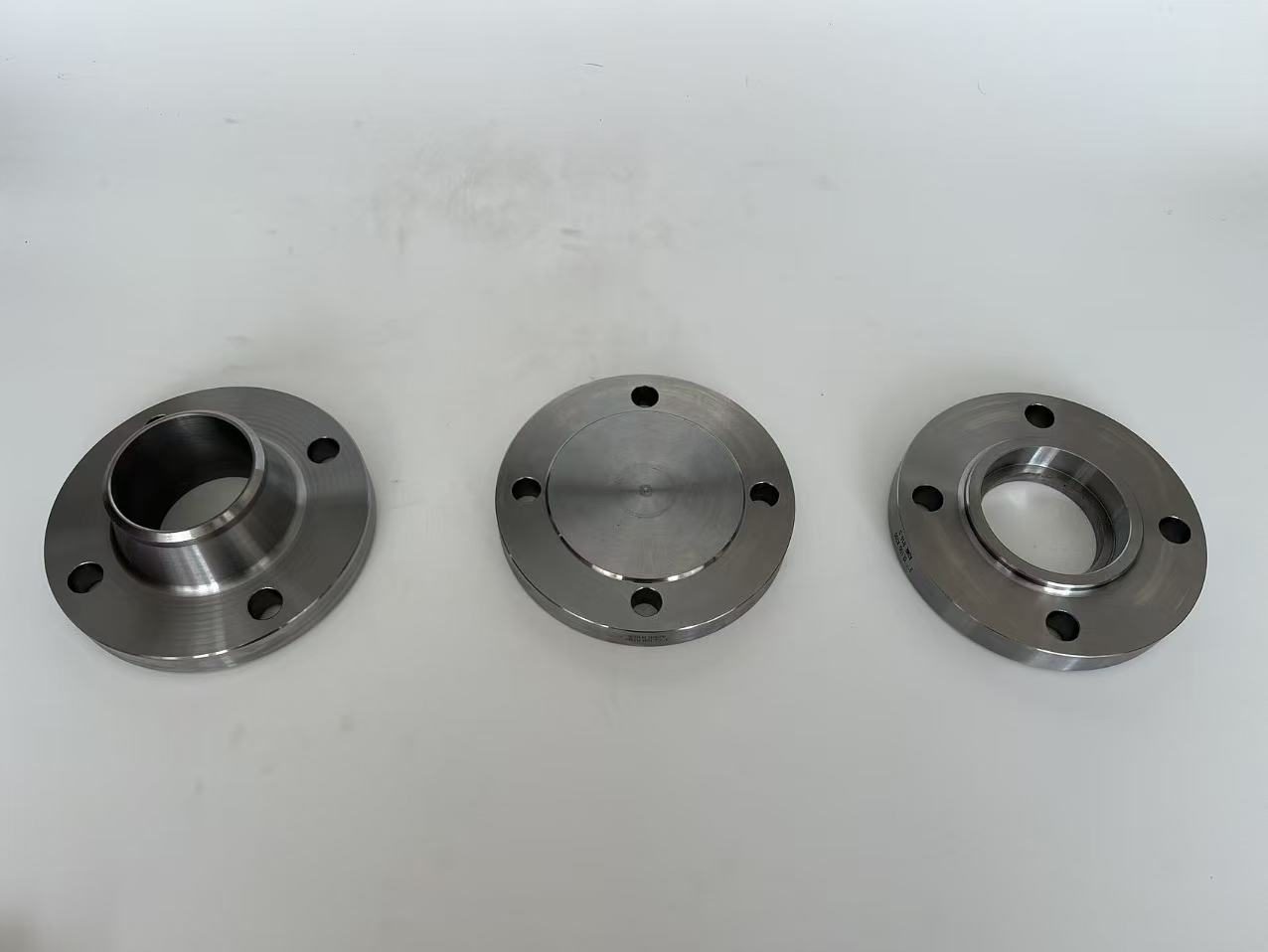
Weld Neck Flange
What it is: A weld neck flange is a flange with a long tapered hub that is butt-welded to the pipe, so the flange, the hub, and the pipe wall form one continuous metal path.
How it connects: The pipe end is beveled and joined to the flange neck with a full-penetration butt weld. The taper blends the flange into the pipe wall, so stress spreads across the joint instead of building up at a single weld line. The weld also sits away from the gasket surface, which keeps the sealing face undisturbed.
Best for: Weld neck flanges suit high-pressure and high-temperature lines that run continuously, from Class 150 up to Class 2500 in carbon steel to ASTM A105. Steam, oil, gas, and chemical process lines all rely on them. They are the wrong choice where a joint has to open often, because the butt weld is permanent. Our weld neck flanges cover the standard ASME B16.5 range.
Slip-On Flange
What it is: A slip-on flange is a flat ring with a bore slightly larger than the pipe outside diameter, and the pipe slides through the flange before any welding is done.
How it connects: The pipe passes into the flange bore and stops just short of the face, then the joint is secured with two fillet welds, one around the outside of the flange and one inside. Alignment is simple, because the fitter can rotate the flange on the pipe until the bolt holes line up before tacking.
Best for: Slip-on flanges suit low and medium pressure work, typically Class 150 and Class 300, where the media is not hazardous and the line does not run at extreme temperature. They cost less to machine than weld necks, they fit crowded pipework where there is no room for a long hub, and they install quickly. Our slip-on flanges are produced to ASME B16.5.
Blind Flange
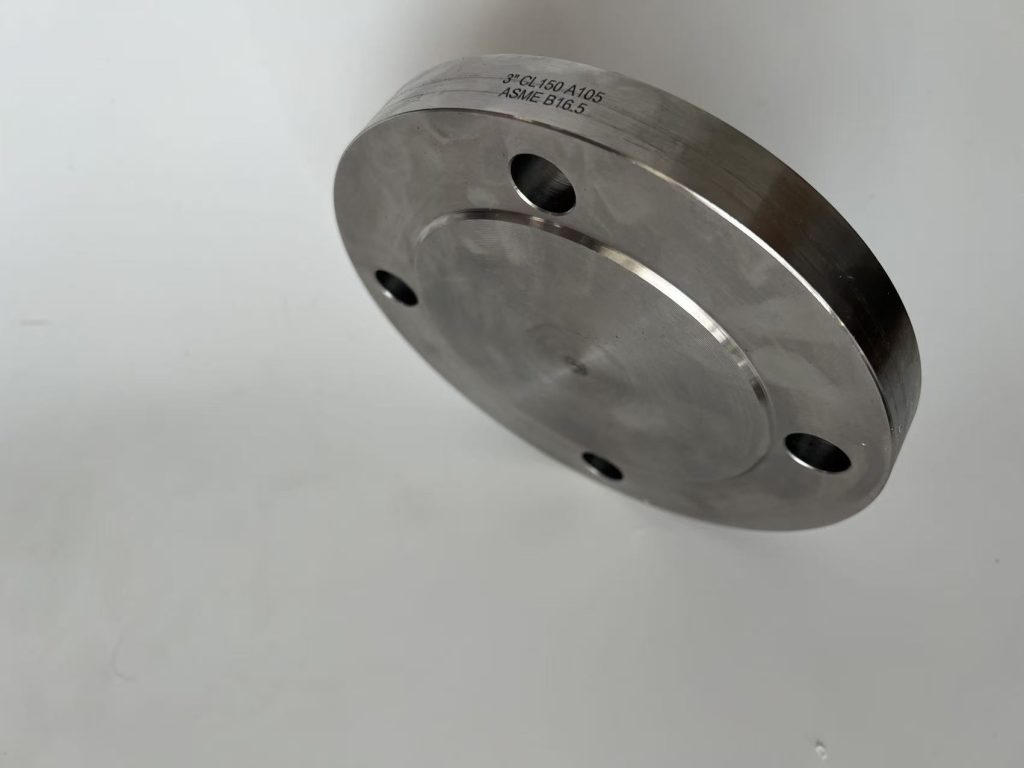
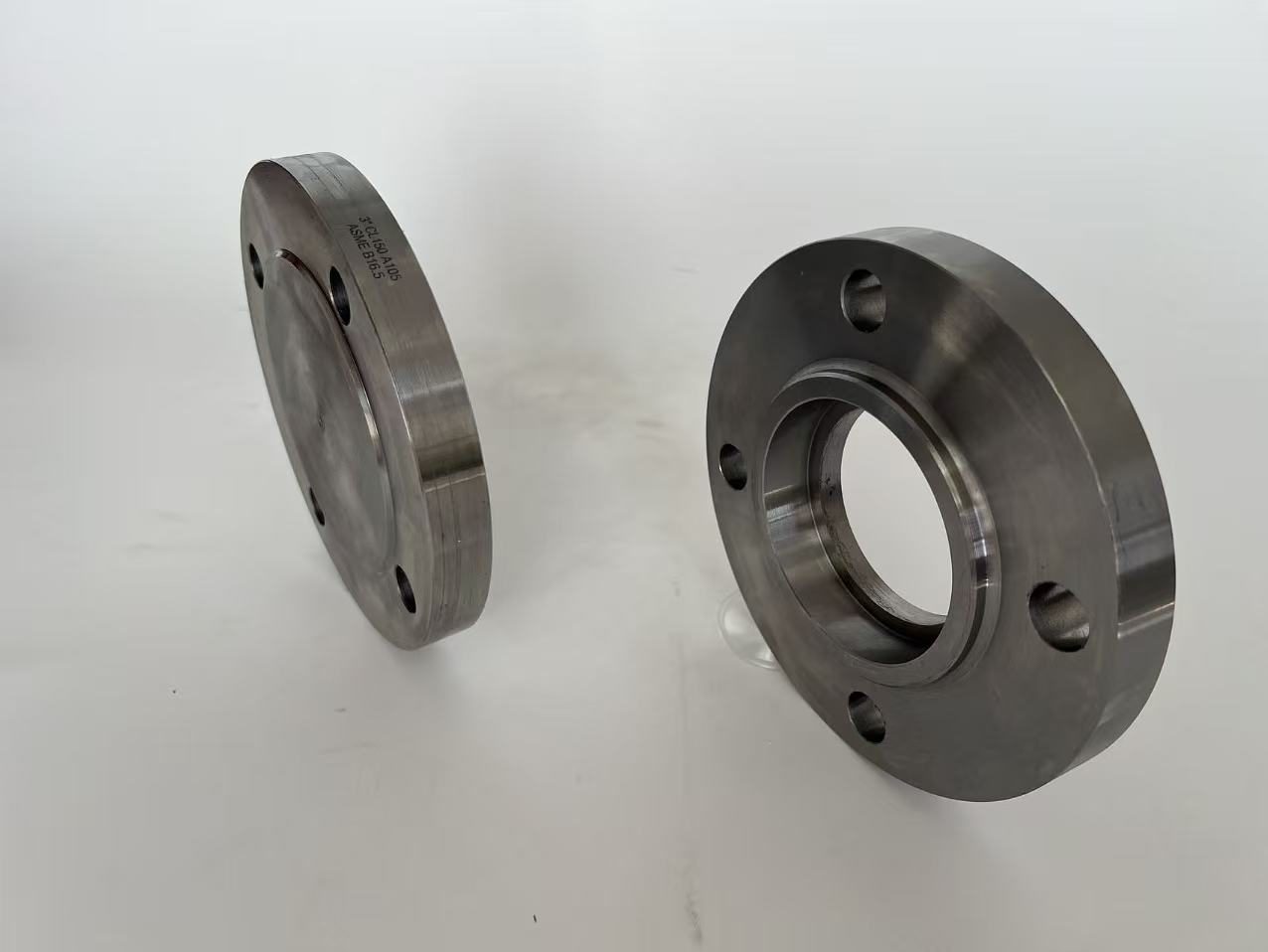
What it is: A blind flange is a solid disk with no bore in the center, and its only job is to close the end of a pipe, a valve, or a vessel opening.
How it connects: The blind flange bolts to a mating flange with a gasket between the two faces. Nothing is welded to the pipe it closes, so the whole closure comes off by undoing the bolts, and the line can be opened again whenever needed.
Best for: Blind flanges suit line terminations, isolation points for pressure testing, and nozzles kept for future tie-ins. They hold full line pressure at the closed end, and they work in high pressure classes as well as any welded type. We cover the applications in more detail in our guide to what a blind flange is used for. Our blind flanges cover the standard range in carbon steel.
Socket Weld Flange
What it is: A socket weld flange has a machined socket in the bore instead of a straight-through hole, and the pipe inserts into that socket before a single fillet weld is laid.
How it connects: The pipe pushes into the socket until it reaches an internal shoulder, with a small expansion gap left between the pipe end and the shoulder. One external fillet weld around the joint locks the pipe in place. The socket keeps the bore in line with the pipe, which leaves a smooth internal surface through the joint.
Best for: Socket weld flanges suit small-bore, high-pressure lines, typically Class 300 and above, where a butt weld is hard to lay on such a small diameter. They are standard on chemical injection lines, hydraulic circuits, and sampling lines. The socket design limits them to small pipe sizes. Our socket weld flanges are machined to ASME B16.5.
Threaded Flange
What it is: A threaded flange carries internal threads in its bore that match the pipe threads, and the flange screws onto the pipe with no welding at all.
How it connects: The threaded flange is screwed onto a threaded pipe end until it seats tight. A seal weld can be added on lines where leakage must be ruled out, but on most installations the thread alone carries the joint, which means the connection can be unscrewed and reused.
Best for: Threaded flanges suit small-diameter, low-pressure lines and sites where hot work is not allowed, such as plant areas with flammable storage. They install fast with basic tools, and they come off just as fast, which makes them practical for temporary lines and equipment that gets moved. Our threaded flanges cover Class 150 and Class 300 to ASME B16.5.
Lap Joint Flange
What it is: A lap joint flange is a loose backing ring that never touches the media in the pipe, and it always works together with a stub end welded to the line.
How it connects: The stub end is butt-welded to the pipe, and the flange ring slides over the pipe behind it. The ring rotates freely around the stub end, so the bolt holes can be turned to match any mating flange without cutting or re-welding anything.
Best for: Lap joint flanges suit systems that open often for inspection and cleaning. They hold lower pressure than a weld neck, and the two-part design costs more than a single slip-on, so they are chosen for easier alignment and lower long-term maintenance work, not for raw strength. Our lap joint flanges are supplied to ASME B16.5.
Reducing Flange
What it is: A reducing flange has a bore smaller than its nominal flange size, and it joins a larger line to a smaller one in a single part instead of using a separate reducer fitting.
How it connects: The reducing flange bolts to the mating flange of the larger line, while the smaller pipe welds or threads into the reduced bore, depending on the base pattern. It is supplied in weld neck, slip-on, and threaded versions, so the connection follows the base type.
Best for: Reducing flanges suit size changes in crowded pipework where a standard reducer plus two flanges would take up space that does not exist. They work on moderate pressure lines, and they are ordered against the exact two sizes involved rather than picked from stock.
Orifice Flange
What it is: An orifice flange is supplied in pairs, and each flange carries a machined pressure tap in its body, so the pair can clamp an orifice plate and carry the pressure signal out to instruments.
How it connects: The two orifice flanges bolt together around an orifice plate with gaskets on both sides, in the same way a standard pair of flanges closes on a gasket. The taps line up with the plate and connect to impulse lines that lead to the flow meter.
Best for: Orifice flanges suit flow measurement sections on process lines, where the flow rate has to be read continuously. They are ordered as a set with the plate, and the facing pattern is matched to the pressure class of the line they sit on.
Flange Types Compared
The table below puts the eight flange types side by side.
| Flange type | How it connects | Typical use | High pressure |
|---|---|---|---|
| Weld neck | Full-penetration butt weld through a tapered hub | Continuous process lines, steam, oil and gas | Yes |
| Slip-on | Two fillet welds, inside and outside | Utility and medium-pressure lines | Up to Class 300 in common use |
| Blind | Bolted solid closure with a gasket | Closing line ends and vessel nozzles | Yes |
| Socket weld | Single fillet weld on a socketed pipe end | Small-bore high-pressure lines | Yes, on small diameters |
| Threaded | Screwed onto the pipe, no welding | No-hot-work areas, temporary lines | No |
| Lap joint | Loose ring on a butt-welded stub end | Lines opened often for inspection | No |
| Reducing | Bolts to the larger line, welds to the smaller pipe | Size changes in tight spaces | Depends on the base type |
| Orifice | Bolted pair holding an orifice plate | Flow measurement sections | Depends on the line class |
FAQ
What is the most common type of pipe flange?
The weld neck flange is the most common type on process piping. Its tapered hub and full-penetration butt weld carry stress smoothly, and the weld is easy to inspect. Slip-on flanges are also widely used on utility and medium-pressure lines because they align easily and cost less.
Which flange type is best for high pressure?
The weld neck flange is the standard choice for high pressure. The tapered hub spreads stress between the flange and the pipe, and the butt weld suits radiographic inspection. Blind flanges also hold high pressure when they close a line end, because the closure is solid and bolted.
What is the difference between a weld neck and a slip on flange?
A weld neck flange is butt-welded through a long tapered hub, so stress moves through the joint in a smooth path and the type suits high pressure. A slip-on flange slides over the pipe and takes two fillet welds, which concentrate stress at the welds, so it stays on low and medium pressure service.
Can you remove a blind flange without cutting the pipe?
Yes, a blind flange comes off without cutting anything. It bolts to the mating flange and has no weld to the pipe it closes, so undoing the bolts removes it. That is why blind flanges are used at line ends, test isolation points, and connections kept for future tie-ins.
Picking between the eight flange types comes down to the pressure the line carries, the space around the joint, and how often the joint has to open. Mingyang Pipe Fittings is a carbon steel flange supplier and exporter based in Cangzhou, China. Send your sizes, pressure class, and quantity, and we will confirm price and lead time in writing.