
Stainless Steel Butt Weld Elbows — 90°, 45°, 180°
Stainless Steel Butt Weld Elbows — 90°, 45°, 180° (Long Radius and Short Radius)
 1 / 2
Description
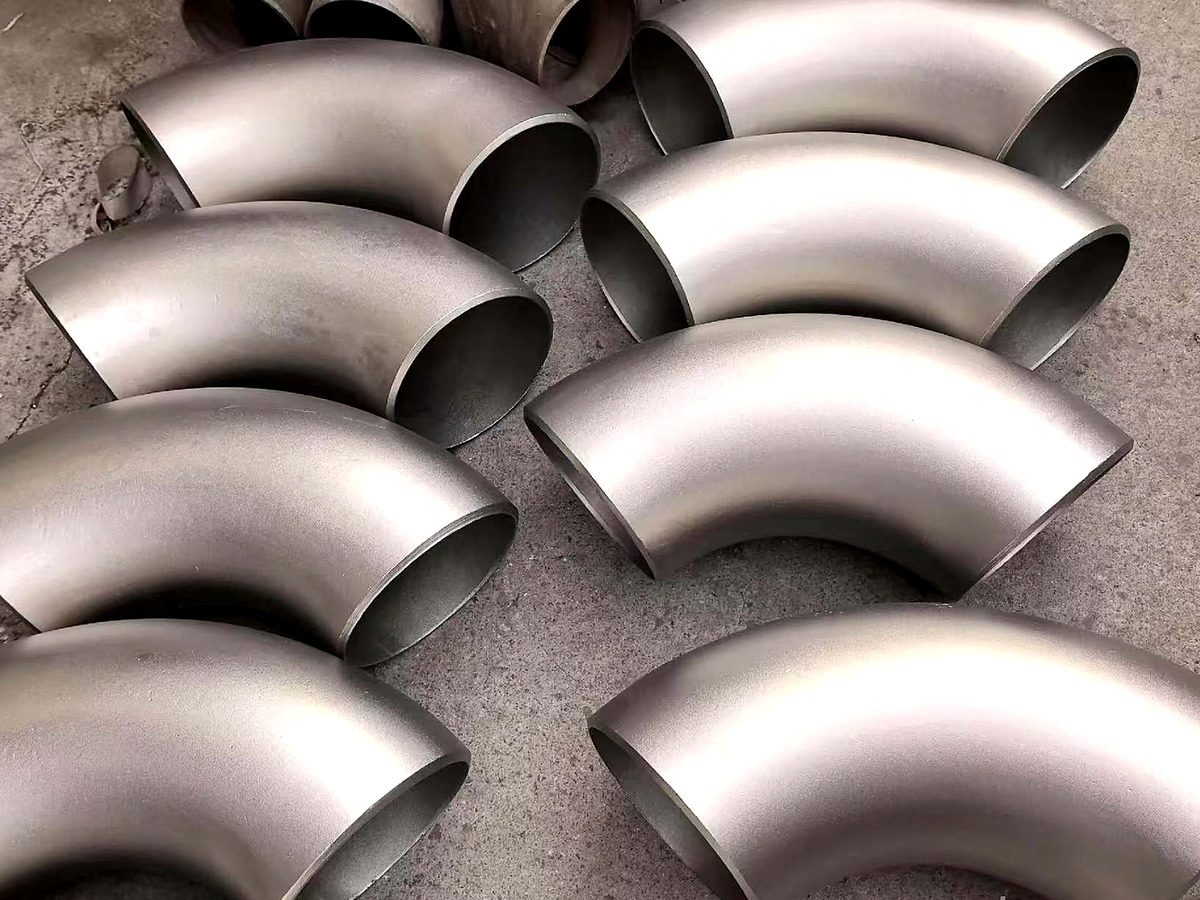
A butt weld elbow changes the direction of a pipeline. It is welded to the pipe with a full penetration butt weld, so the fitting and the pipe become one continuous pressure boundary with no threaded or socket cavity. We manufacture stainless steel elbows in three angles — 90 degrees, 45 degrees, and 180 degrees (return bends) — in long radius (LR, centerline radius 1.5 times the nominal pipe size) and short radius (SR, centerline radius equal to the nominal pipe size). Dimensions follow ASME B16.9 for long radius and ASME B16.28 for short radius, the same dimensional standards used for carbon steel fittings, so the fitting footprint is unchanged when a line is upgraded from carbon steel to stainless. Material callout is ASTM A403, the wrought stainless piping fitting specification, in grades WP304, WP304L, WP316 and WP316L. Duplex grades to ASTM A815 are available on request. Like all butt weld fittings, stainless elbows do not carry a pressure class: the wall thickness is specified by pipe schedule, and the pressure capability follows from the schedule, the material, and the applicable piping code. Fittings are supplied solution annealed and pickled, with an EN 10204 3.1 Material Test Certificate traceable to the heat number.
Specifications
| Materials | ASTM A403 WP304, WP304L, WP316, WP316L (austenitic stainless steel). Duplex 2205 and super duplex 2507 to ASTM A815 on request. |
| Standards | ASME B16.9 (long radius elbows and returns); ASME B16.28 (short radius elbows and returns). Material to ASTM A403 / ASME SA403. Pipe schedules to ASME B36.19M. |
| Type | 90 degree elbow (90° LR, 90° SR); 45 degree elbow (45° LR, 45° SR); 180 degree return bend (180° LR, 180° SR) |
| Radius | LR (Long Radius) — centerline radius 1.5 × NPS; SR (Short Radius) — centerline radius 1.0 × NPS |
| Size Range | NPS 1/2 inch to 24 inch. Seamless or welded construction depending on size, wall thickness and grade availability. Detailed feasibility confirmed per enquiry. |
| Pressure Rating | Butt weld fittings do not carry a pressure class. Wall thickness is specified by pipe schedule, and the pressure-temperature capability is determined by the schedule, the material, and the applicable piping code such as ASME B31.3. Please state the pipe schedule at quotation stage. |
| Wall Thickness | Specified by pipe schedule to ASME B36.19M — the stainless steel pipe dimension standard, with schedules designated 5S, 10S, 40S and 80S. The schedule must be stated at quotation stage, and it must match the connecting pipe. |
| Manufacturing Process | Seamless or welded construction, hot or cold formed, followed by solution annealing and rapid cooling as required by ASTM A403. |
| Heat Treatment | Solution annealing followed by rapid cooling, as required by ASTM A403. Fittings are supplied in the solution annealed condition unless otherwise agreed. |
| End Preparation | Beveled ends to ASME B16.25 for butt welding |
| Surface Treatment | Pickled and passivated after solution annealing (standard); mechanical polish, glass bead blast, or electropolish on request. Cleaning to ASTM A380 and passivation to ASTM A967 available on request. |
| Iron Contamination Control | Stainless fittings are produced, stored, packed and shipped separately from carbon steel, using dedicated handling and packing materials. This prevents free iron pickup, which is the usual cause of rust spotting on stainless surfaces after delivery. |
| MOQ | Negotiable based on grade, size and schedule. Small quantities of standard grades in common sizes are workable; special grades and non-standard schedules carry higher minimums. |
| Lead Time | Standard grades in common sizes typically 15-25 days, subject to mill schedule; duplex and super duplex grades, and non-standard sizes or schedules, 30-45 days. Shipping time additional depending on destination. |
| Price Validity | Shorter than for carbon steel, because stainless raw material cost moves with the nickel and molybdenum market. Please confirm validity when you request a quotation. |
| HS Code | 7307.23 (butt welding fittings of stainless steel); GCC Common External Tariff 5% on CIF value for Oman and UAE import |
| Customization | Non-standard angles (30 degree, 60 degree, or any angle to drawing), non-standard radii, wall thickness to a specified schedule, special grades, and special dimensions are supported. Technical drawings or detailed specifications required for custom orders. |
| Documents | EN 10204 Type 3.1 MTC (standard with every shipment); PMI test report, intergranular corrosion test to ASTM A262 Practice E, ferrite content measurement, and NDT reports (UT / MT / PT / RT) on request at quotation stage |
Application Scenarios
Commonly supplied to the following industries and applications:
- Desalination and water treatment — high chloride and seawater service, where grade selection is driven by chloride content and temperature
- Chemical and petrochemical process lines — acids, caustics, solvents and process water
- Oil and gas — corrosion resistant process piping, utility and chemical injection lines, and topside piping on offshore platforms
- Food, beverage and pharmaceutical — process lines requiring a cleanable, non-contaminating surface
- Power generation — condensate, demineralised water, and flue gas desulphurisation (FGD) systems
- Marine and coastal installations — salt-laden atmospheres where carbon steel corrodes quickly
- LNG and cryogenic service — austenitic grades retain toughness at low temperature
- Pulp, paper and textile — process lines carrying corrosive or chemically aggressive media
- EPC contractors and overseas infrastructure projects — water transmission mains, district cooling networks, airport and industrial park piping, supplied to the project specification and the document package your QA team requires
Stainless steel is not a universal upgrade over carbon steel. On dry, non-corrosive, ambient temperature service, carbon steel is usually the correct and more economical choice.
Samples, Third-Party Inspection and Test Records
Sample pieces can be produced before the batch runs, so that dimensions, bevel profile and fit-up can be checked on your side first. Sample cost and delivery time are advised with the quotation, based on size and material.
Buyer-nominated inspection is supported. SGS, BV, Intertek or your own inspector can witness dimensional checking, marking, coating and container loading at the production site, and we provide the documents and site access needed for the visit. Where a visit is not practical, the same checks can be followed through a live video walkthrough. Third-party inspection fees are normally carried by the buyer.
Non-destructive testing and hydrostatic test records are available on request and can be shipped with the order, together with the EN 10204 3.1 material certificate, the heat number and marking list, dimensional records, packing list and certificate of origin. Tell us at enquiry stage which records your project requires, and they are included in the quotation.
Grade Selection
| Criterion | 304 / 304L | 316 / 316L | Duplex 2205 (A815) |
|---|---|---|---|
| Molybdenum Content | None | Contains molybdenum | Contains molybdenum and nitrogen |
| Chloride Pitting Resistance | Lowest of the three | Better than 304 | Highest of the three |
| Chloride SCC Resistance | Lowest — the main limitation | Better than 304, still limited | Best of the three |
| Typical Service | General process, freshwater, food, cryogenic | Chemical, marine atmosphere, desalination | Seawater, high chloride, high strength duty |
| Mechanical Strength | Standard austenitic | Standard austenitic | Higher yield strength than 304 or 316 |
| Availability | Standard stock grade | Standard stock grade | On request, longer lead time |
| Relative Cost | Lowest of the three | Higher than 304 | Higher than 316L |
Grade Selection Logic
304 vs 304L
The L grade is the low carbon version. The lower carbon content reduces the risk of sensitisation during welding, where chromium carbides precipitate at the grain boundaries and leave the heat affected zone vulnerable to intergranular corrosion. Where the fitting will be welded, the L grade is normally specified.
Buyer FAQ
Q1: Should I choose 304L or 316L?
A1: It depends on the chloride content of the fluid and the operating temperature. 316L contains molybdenum, which gives better resistance to pitting and crevice corrosion in chloride bearing service such as coastal atmospheres, process water with dissolved salts, and many chemical streams. 304L is the economical choice for fresh water, general process duty, cryogenic service and food grade lines where chlorides are low. If your line carries seawater, brine, or high chlorides at elevated temperature, neither 304L nor 316L is the right answer and a duplex grade should be considered. Tell us the fluid, the chloride level and the operating temperature, and we will recommend a grade rather than letting you guess.
Q2: What is the difference between 304 and 304L?
A2: Carbon content. The L stands for low carbon. During welding, standard 304 can be heated into the range where chromium carbides form at the grain boundaries, drawing chromium away from the surrounding metal and leaving a narrow band that is no longer stainless. This is called sensitisation, and it leads to intergranular corrosion in the heat affected zone. The low carbon L grade greatly reduces that risk. Because elbows are welded into the line, the L grade is normally the correct callout. We supply both, and the MTC shows which one you received.
Q3: Can stainless steel elbows be used in seawater or desalination service?
A3: With the right grade, yes, and this is one of the most common applications in the Gulf. Plain 316L is used on many desalination lines, but it is not immune: in warm chloride service it can still suffer pitting and crevice corrosion, and under tensile stress it can suffer chloride stress corrosion cracking. Where chloride content, temperature, or both are high, duplex 2205 to ASTM A815 is the usual specification. We will not quote a grade for seawater duty without knowing the chloride level and the operating temperature, because guessing here causes failures, not complaints.
Q4: Do the elbows come solution annealed and pickled?
A4: Yes, as standard. Solution annealing dissolves carbides and restores the corrosion resistant structure after forming, and it is required by ASTM A403. Pickling removes the oxide scale formed during heat treatment, and passivation promotes the formation of the protective chromium oxide film on the surface. Fittings that are supplied bright without pickling will look cleaner out of the box but carry a weaker passive layer. If your specification calls for cleaning to ASTM A380 or passivation to ASTM A967, state it at quotation stage and we will include it in the documentation.
Q5: What is PMI testing, and can you provide it?
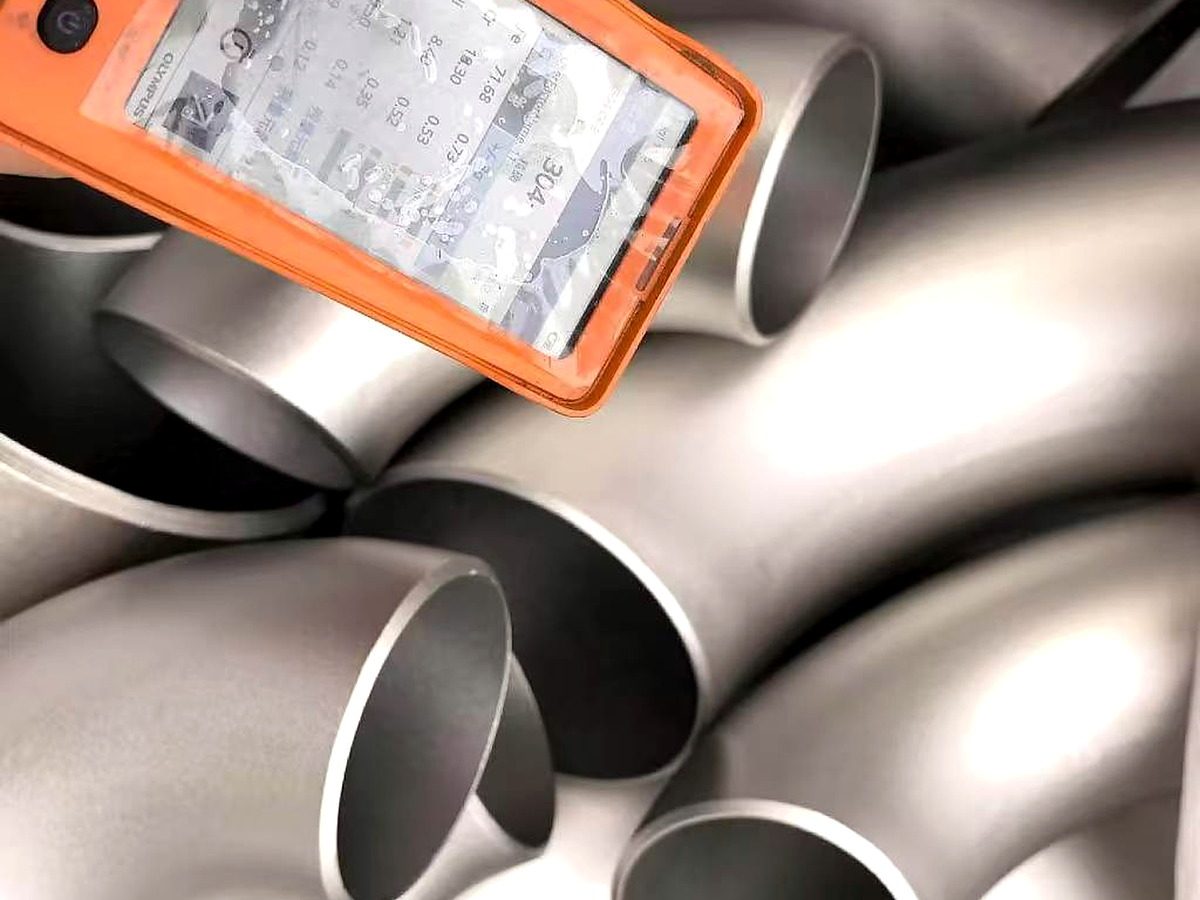
A5: PMI stands for Positive Material Identification. A portable analyser is held against the fitting and reads the actual alloy chemistry, confirming that the material is genuinely 316L and not 304 with a 316L stamp. It is the standard safeguard against material mix-up, which is a real risk in the stainless supply chain and expensive to discover after welding. PMI is available on request and is strongly recommended for critical service, for duplex grades, and for any order where the project specification requires it. A PMI report can be supplied with the shipment.
Q6: Why is the price validity shorter than for carbon steel?
A6: Because stainless raw material cost tracks the nickel, chromium and molybdenum markets, and these move. A quotation that a mill will honour for thirty days on carbon steel may only be honoured for a few days on stainless, and it moves fastest on the high alloy grades. We will always state the validity period on the quotation. If you are budgeting ahead of a project award, tell us and we will quote a budget figure with the assumption stated, so you are not caught out by a price that moved before the order was placed.
Q7: Will stainless steel rust, and how do you prevent it?
A7: Stainless steel resists corrosion, but it is not stain proof, and rust spotting on delivered fittings is almost always caused by free iron picked up from contact with carbon steel. A carbon steel wire brush, a shared grinding wheel, a sling that previously lifted black pipe, or storage next to a carbon steel cutting operation will all leave iron particles on the surface that then rust and stain the fitting. We prevent this by producing, storing, packing and shipping stainless separately from carbon steel, using dedicated handling and packing materials. On site, keep stainless fittings away from carbon steel fabrication, and use dedicated stainless tools and slings.
Q8: What does the EN 10204 3.1 certificate show?
A8: It shows the chemical composition and mechanical properties of the specific heat of material your fittings were made from, together with the heat number that is marked on the fittings, the material specification and grade, the standard, the size and schedule, the heat treatment condition, and the results of any supplementary tests you requested. It is issued by the manufacturer's inspection department, not by us. This is the document that lets your inspector or your client trace every fitting back to its melt. We can also arrange intergranular corrosion testing to ASTM A262 Practice E and ferrite content measurement where the specification calls for it.
Q9: What marking is applied to stainless elbows?
A9: We use laser engraving or electro-etching, and low-chloride ink for stencil marking. We do not use hard steel stamping on stainless as a matter of course: stamp marks create stress raisers and can become initiation sites, and steel stamping tools that have been used on carbon steel carry the free iron we are trying to avoid. Standard marking includes the manufacturer's identification, the grade (for example WP316L), the size, the schedule or wall thickness, the standard (ASME B16.9 or B16.28), and the heat number for traceability back to the MTC. Marking materials are chloride free.
Q10: What is the HS Code and tariff for stainless elbows imported into Oman and the UAE?
A10: Stainless steel butt weld elbows are classified under HS Code 7307.23 (butt welding fittings of stainless steel). This is different from carbon steel butt weld fittings, which fall under 7307.93, and different again from flanges. GCC Common External Tariff is 5% on CIF value for goods imported into Oman and the UAE. Standard import documentation includes Commercial Invoice, Packing List, Bill of Lading, Certificate of Origin, MTC 3.1, and Fumigation Certificate for wooden packaging. We can provide full export documentation support on request.
Q11: What sizes and pressure ratings are available for stainless steel butt weld elbows?
A11: NPS 1/2 inch to 24 inch, in seamless or welded construction depending on size, wall thickness and grade availability. Wall thickness is specified by pipe schedule. Sizes and ratings outside this range can be reviewed against your drawing. The exact range confirmed for your order is stated in the quotation.
Q12: How is the wall thickness determined for stainless steel butt weld elbows?
A12: Butt-weld fittings do not carry a pressure class. Wall thickness is specified by pipe schedule to ASME B36.19M, the stainless steel pipe dimension standard, with schedules designated 5S, 10S, 40S and 80S. The schedule must be stated when you request a quotation.
Q13: What is the lead time for stainless steel butt weld elbows?
A13: Standard sizes in regular material normally take 7-15 days. Non-standard sizes, special materials and custom orders take longer. The exact lead time for this product is given in the specification table on this page and is confirmed in writing with your quotation. Sea freight to the Gulf is additional and depends on the destination port. All lead times are subject to the production schedule at the time of order.
Q14: Is there a minimum order quantity for stainless steel butt weld elbows?
A14: There is no fixed minimum. Standard items can ship from a single pallet, and custom production is normally quoted at full container load. Small trial orders and mixed-size orders are accepted. Send your size list and we will confirm what can be combined in one shipment.
Q15: How are stainless steel butt weld elbows packed and marked?
A15: Flanges and fittings are packed in plywood cases or on plywood pallets with anti-rust treatment, strapped and stretch-wrapped for sea freight. Each piece carries the heat number, and the material, size, standard and pressure class or schedule are marked on the item or on the case label. Shipping marks are printed to your specification, and a fumigation certificate is provided where wooden packaging is used.
Q16: Can you produce stainless steel butt weld elbows to our drawing or to non-standard specifications?
A16: Yes. Send the drawing, material, quantity and the applicable standard, and we will confirm feasibility and quote. Non-standard angles, non-standard schedules, special materials and special dimensions are produced against your drawing. The details we need to quote are listed on our custom service page.
Engineer's Note
The following technical guidance reflects the perspective of a senior piping engineer with extensive experience in industrial piping system design.
Stainless elbows are specified for one reason: the fluid or the atmosphere would attack carbon steel. Once that decision is made, the grade is the decision that matters, and it is driven by chemistry and temperature, not by budget. The following factors should drive your specification:
- The Grade Is Set by Chlorides and Temperature
- 304L for fresh water, general process, cryogenic and food grade duty
- 316L for chemical process, coastal atmospheres and moderate chlorides
- Duplex 2205 for seawater, brine, and high chloride service at elevated temperature
- Chloride stress corrosion cracking is the most common failure mode of austenitic stainless in warm chloride service; risk rises with both chloride level and temperature
- Specify the L Grade Where the Fitting Will Be Welded
- Low carbon reduces sensitisation in the heat affected zone
- Sensitisation causes intergranular corrosion, not surface rust
- For welded fabrication, the L grade is normally the correct callout
- Elbows Do Not Have a Pressure Class
- Wall thickness is specified by pipe schedule to ASME B36.19M
- Stainless schedules are designated 5S, 10S, 40S and 80S
- The schedule must match the connecting pipe
- Dimensions Are Unchanged from Carbon Steel
- ASME B16.9 and B16.28 cover stainless and carbon steel fittings alike
- An upgrade from carbon steel to stainless does not change the fitting footprint
- This makes a material upgrade straightforward on an existing layout
- Solution Annealing and Pickling Are Not Optional Extras
- ASTM A403 requires solution annealing after forming
- Pickling removes heat treatment scale and restores the surface
- A fitting that looks bright but has not been pickled carries a weaker passive layer
- Control Free Iron from Mill to Site
- Free iron pickup is the usual cause of rust spotting on delivered stainless
- Shared tools, slings, brushes and storage with carbon steel are the source
- Keep stainless segregated through fabrication, and use dedicated tools
- Verify the Alloy, Do Not Trust the Stamp
- PMI confirms the actual chemistry of the fitting
- Material mix-up is a genuine risk in the stainless supply chain, and is expensive to find after welding
- Specify PMI for critical service, for duplex grades, and where the project requires it
- Common Mistakes to Avoid
- Choosing 316L for seawater duty without checking chloride level and temperature
- Ordering 304 where the fitting will be welded, instead of 304L
- Asking for a pressure class instead of a pipe schedule
- Accepting a bright finish as proof of passivation
- Skipping PMI on a critical line, then discovering the mix-up after welding
- Letting stainless and carbon steel share tools, slings or storage
For project-specific engineering support, please share your service conditions (size, angle, radius, schedule, grade, design pressure and temperature, fluid composition, chloride content, seamless or welded, and examination requirements) and we will review the specification and provide a written recommendation.
Frequently Asked Questions
Should I choose 304L or 316L?
It depends on the chloride content of the fluid and the operating temperature. 316L contains molybdenum, which gives better resistance to pitting and crevice corrosion in chloride bearing service such as coastal atmospheres, process water with dissolved salts, and many chemical streams. 304L is the economical choice for fresh water, general process duty, cryogenic service and food grade lines where chlorides are low. If your line carries seawater, brine, or high chlorides at elevated temperature, neither 304L nor 316L is the right answer and a duplex grade should be considered. Tell us the fluid, the chloride level and the operating temperature, and we will recommend a grade rather than letting you guess.
What is the difference between 304 and 304L?
Carbon content. The L stands for low carbon. During welding, standard 304 can be heated into the range where chromium carbides form at the grain boundaries, drawing chromium away from the surrounding metal and leaving a narrow band that is no longer stainless. This is called sensitisation, and it leads to intergranular corrosion in the heat affected zone. The low carbon L grade greatly reduces that risk. Because elbows are welded into the line, the L grade is normally the correct callout. We supply both, and the MTC shows which one you received.
Can stainless steel elbows be used in seawater or desalination service?
With the right grade, yes, and this is one of the most common applications in the Gulf. Plain 316L is used on many desalination lines, but it is not immune: in warm chloride service it can still suffer pitting and crevice corrosion, and under tensile stress it can suffer chloride stress corrosion cracking. Where chloride content, temperature, or both are high, duplex 2205 to ASTM A815 is the usual specification. We will not quote a grade for seawater duty without knowing the chloride level and the operating temperature, because guessing here causes failures, not complaints.
Do the elbows come solution annealed and pickled?
Yes, as standard. Solution annealing dissolves carbides and restores the corrosion resistant structure after forming, and it is required by ASTM A403. Pickling removes the oxide scale formed during heat treatment, and passivation promotes the formation of the protective chromium oxide film on the surface. Fittings that are supplied bright without pickling will look cleaner out of the box but carry a weaker passive layer. If your specification calls for cleaning to ASTM A380 or passivation to ASTM A967, state it at quotation stage and we will include it in the documentation.
What is PMI testing, and can you provide it?
PMI stands for Positive Material Identification. A portable analyser is held against the fitting and reads the actual alloy chemistry, confirming that the material is genuinely 316L and not 304 with a 316L stamp. It is the standard safeguard against material mix-up, which is a real risk in the stainless supply chain and expensive to discover after welding. PMI is available on request and is strongly recommended for critical service, for duplex grades, and for any order where the project specification requires it. A PMI report can be supplied with the shipment.
Why is the price validity shorter than for carbon steel?
Because stainless raw material cost tracks the nickel, chromium and molybdenum markets, and these move. A quotation that a mill will honour for thirty days on carbon steel may only be honoured for a few days on stainless, and it moves fastest on the high alloy grades. We will always state the validity period on the quotation. If you are budgeting ahead of a project award, tell us and we will quote a budget figure with the assumption stated, so you are not caught out by a price that moved before the order was placed.
Will stainless steel rust, and how do you prevent it?
Stainless steel resists corrosion, but it is not stain proof, and rust spotting on delivered fittings is almost always caused by free iron picked up from contact with carbon steel. A carbon steel wire brush, a shared grinding wheel, a sling that previously lifted black pipe, or storage next to a carbon steel cutting operation will all leave iron particles on the surface that then rust and stain the fitting. We prevent this by producing, storing, packing and shipping stainless separately from carbon steel, using dedicated handling and packing materials. On site, keep stainless fittings away from carbon steel fabrication, and use dedicated stainless tools and slings.
What does the EN 10204 3.1 certificate show?
It shows the chemical composition and mechanical properties of the specific heat of material your fittings were made from, together with the heat number that is marked on the fittings, the material specification and grade, the standard, the size and schedule, the heat treatment condition, and the results of any supplementary tests you requested. It is issued by the manufacturer's inspection department, not by us. This is the document that lets your inspector or your client trace every fitting back to its melt. We can also arrange intergranular corrosion testing to ASTM A262 Practice E and ferrite content measurement where the specification calls for it.
What marking is applied to stainless elbows?
We use laser engraving or electro-etching, and low-chloride ink for stencil marking. We do not use hard steel stamping on stainless as a matter of course: stamp marks create stress raisers and can become initiation sites, and steel stamping tools that have been used on carbon steel carry the free iron we are trying to avoid. Standard marking includes the manufacturer's identification, the grade, the size, the schedule or wall thickness, the standard, and the heat number for traceability back to the MTC. Marking materials are chloride free.
What is the HS Code and tariff for stainless elbows imported into Oman and the UAE?
Stainless steel butt weld elbows are classified under HS Code 7307.23 (butt welding fittings of stainless steel). This is different from carbon steel butt weld fittings, which fall under 7307.93, and different again from flanges. GCC Common External Tariff is 5% on CIF value for goods imported into Oman and the UAE. Standard import documentation includes Commercial Invoice, Packing List, Bill of Lading, Certificate of Origin, MTC 3.1, and Fumigation Certificate for wooden packaging. We can provide full export documentation support on request.
What sizes and pressure ratings are available for stainless steel butt weld elbows?
NPS 1/2 inch to 24 inch, in seamless or welded construction depending on size, wall thickness and grade availability. Wall thickness is specified by pipe schedule. Sizes and ratings outside this range can be reviewed against your drawing. The exact range confirmed for your order is stated in the quotation.
How is the wall thickness determined for stainless steel butt weld elbows?
Butt-weld fittings do not carry a pressure class. Wall thickness is specified by pipe schedule to ASME B36.19M, the stainless steel pipe dimension standard, with schedules designated 5S, 10S, 40S and 80S. The schedule must be stated when you request a quotation.
What is the lead time for stainless steel butt weld elbows?
Standard sizes in regular material normally take 7-15 days. Non-standard sizes, special materials and custom orders take longer. The exact lead time for this product is given in the specification table on this page and is confirmed in writing with your quotation. Sea freight to the Gulf is additional and depends on the destination port. All lead times are subject to the production schedule at the time of order.
Is there a minimum order quantity for stainless steel butt weld elbows?
There is no fixed minimum. Standard items can ship from a single pallet, and custom production is normally quoted at full container load. Small trial orders and mixed-size orders are accepted. Send your size list and we will confirm what can be combined in one shipment.
How are stainless steel butt weld elbows packed and marked?
Flanges and fittings are packed in plywood cases or on plywood pallets with anti-rust treatment, strapped and stretch-wrapped for sea freight. Each piece carries the heat number, and the material, size, standard and pressure class or schedule are marked on the item or on the case label. Shipping marks are printed to your specification, and a fumigation certificate is provided where wooden packaging is used.
Can you produce stainless steel butt weld elbows to our drawing or to non-standard specifications?
Yes. Send the drawing, material, quantity and the applicable standard, and we will confirm feasibility and quote. Non-standard angles, non-standard schedules, special materials and special dimensions are produced against your drawing. The details we need to quote are listed on our custom service page.