
A container of flanges comes off the berth at Sohar and lands in the yard. The seventh day starts the clock. The buyer holds the bill of lading, the invoice and the packing list, and the cargo is two hundred metres away. He cannot take it.
Nothing is wrong with the goods. An import declaration in Oman can only be filed through Bayan, and Bayan only recognises an importer registered in the country. Without that identity the container sits in the yard until somebody agrees to declare it in their own name.
That is the part most Chinese suppliers leave out when they quote CIF Sohar. The rate is right, the delivery date is right, and the first thing the buyer asks his broker is whether his file is clean enough to file.
The importer code comes before the goods
Three things have to be in place before a company can lodge a single line on Bayan.
A commercial registration whose activity list actually covers importing. A trading CR with no import activity will be refused at enrolment, and the fix is an amendment through Invest Easy, not a phone call to customs.
An Oman Chamber of Commerce and Industry membership that is still valid on the day of filing. Customs synchronises the registries. A lapsed OCCI certificate blocks activation of a profile that is otherwise complete.
A PKI digital signature for the authorised signatory. This is a chip on the resident card or a USB token, issued at a Royal Oman Police civil status office or a Sanad office. The signature is what actually signs the declaration. Bayan will not accept a username and password for the secured functions.
Three wrong PIN entries lock the PKI. The unlock is not online. Somebody has to walk into a civil status office with a passport and a resident card, which is a half day gone from a free storage period that was already running.
A foreign company with no Omani entity cannot file at all. It buys through a local importer of record, or it hands the file to a licensed broker who declares in the importer’s name. Both are normal, and both mean the import record sits under somebody else’s CR. There is a tax consequence in that route worth knowing before it is chosen: import VAT is deductible only by the importer of record, so an end buyer whose goods clear under another company’s CR has no input tax to claim.
What one declaration costs
The declaration fee is published on the customs service page: 15 Omani rials for a company, 5 for an individual. That buys the entry itself, and it is not the duty. Anything after the entry is charged separately: amending a filed declaration is OMR 10, cancelling one is OMR 10, and a Bayan user account is OMR 10 per user. A code corrected after filing is a paid correction, which is the practical argument for getting the twelve digits right the first time.
| Item | Basis | On CIF USD 20,000 |
|---|---|---|
| Declaration fee | Per entry, company | OMR 15 |
| Customs duty | 5% of CIF | USD 1,000 |
| VAT | 5% of CIF plus duty | USD 1,050 |
| Duty and VAT together | 10.25% of CIF | USD 2,050 |
The 5% duty is the GCC common external tariff. Steel products sit at that rate, and there is no separate anti-dumping measure on flanges and butt weld fittings under HS 7307 in Oman today.
VAT is the one that can be moved. A company registered for VAT can apply to the Tax Authority to defer payment of import VAT to the date its return is filed. The application goes in one month before the goods arrive, the authority decides within thirty days, and no reply inside thirty days counts as a refusal. A fully taxable importer that gets the deferment offsets output tax against input tax and pays nothing at the port.
The HS code has to be twelve digits
Since 1 January 2025 Oman runs the GCC Integrated Customs Tariff at twelve digits. The tariff went from about 7,800 lines to more than 13,400. The first eight digits are unchanged, so the duty rate on a given flange did not move. The four digits after them are new.
Most old codes were padded with four zeros. Products that fall outside the named subcategories end in 99 99. Either way, on flanges and butt weld fittings under HS 7307 an eight-digit code entered on Bayan is rejected by the system before a human ever looks at it.
This matters at the invoice stage, not at the port. A commercial invoice that states 7307.93 with nothing after it gives the broker nothing to key in. Ask for the twelve-digit line before the documents are finalised. The split invoice problem gets worse here: every line on every invoice needs its own full code, and a mixed load of flanges, elbows and tees will not share one.
Documents that come back unsigned
The customs service page lists three attachments for an import declaration: commercial invoices, a manufacturer’s country of origin certificate, and a declaration issued by the exporter’s country. The rest of the file, packing list, bill of lading, permits where a permit applies, follows the shipment.
Oman keeps customs and commercial papers outside the Apostille Convention. It told the Hague Conference in 2021 that the convention does not cover them. A certificate of origin and, in most cases, the commercial invoice have to go through a chamber of commerce and then the Omani embassy before a buyer can use them.
That chain is the single most predictable delay on a first shipment. It starts at the chamber, not at the port. A seller who waits until the vessel is at anchor to ask about attestation has already spent the free storage days on paperwork.
Name spellings have to match across the certificate, the invoice and the consignee record. A missing letter in a company name is enough for a rejection, and a rejection at that stage is a second round of embassy fees.
Where the 5% stops being the whole gap
On 1 June 2026 the India–Oman Comprehensive Economic Partnership Agreement entered into force, ratified by Royal Decree 30/2026. Oman opened 98.08% of its tariff lines to Indian-origin goods at zero duty, and of those, 97.96% of the total are at zero from the day the agreement took effect rather than phased over three, five or ten years. Iron and steel sits inside that range.
China has no free trade agreement with Oman or with the GCC. A Chinese flange pays the 5%. An Indian flange of the same size and grade pays nothing.
This is a five point structural gap and no amount of negotiation closes it. What a Chinese supplier can still sell is the part the duty does not touch: a mill certificate that matches the heat number, a 12-digit code that is right the first time, and a box that arrives with the documents already attested. A quotation that promises to save the buyer duty is promising something the exporter cannot deliver.
The clock that costs more than the duty
Free time on import containers at Sohar and Salalah is commonly seven days. Take one carrier’s published Oman tariff as an example: days 8 to 14 run at OMR 12 per day for a 20ft and OMR 20 for a 40ft, days 15 to 21 at OMR 20 and OMR 35, and from day 22 at OMR 35 and OMR 70.
A 40ft held for two extra weeks costs about OMR 245 in demurrage alone. On the USD 20,000 shipment above, the duty was USD 1,000. Two weeks of delay costs roughly the same as the duty, and that is before port storage, before the broker’s second visit, before the container goes back empty and late.
Importers compare freight rates and forget this line. It is the only line on the landed cost sheet that a supplier can actually influence, because it starts when the documents are wrong.
Before the vessel is booked
Three things to settle with the buyer before a first order into Oman leaves China.
- Ask whether the Bayan profile can log in and sign today. A CR and an OCCI certificate on paper are not the same as an active profile with a working PKI.
- Put the twelve-digit HS code on the invoice and the packing list, one per line item. If the code is not settled, neither is the duty.
- Start the chamber and embassy attestation on the certificate of origin and the invoice at the same time the booking is confirmed. It is a calendar item, not a shipping step.
None of this makes a flange cheaper. It decides whether the container leaves the yard on day three or day twenty, and on a first order that difference is larger than the price difference between two mills.
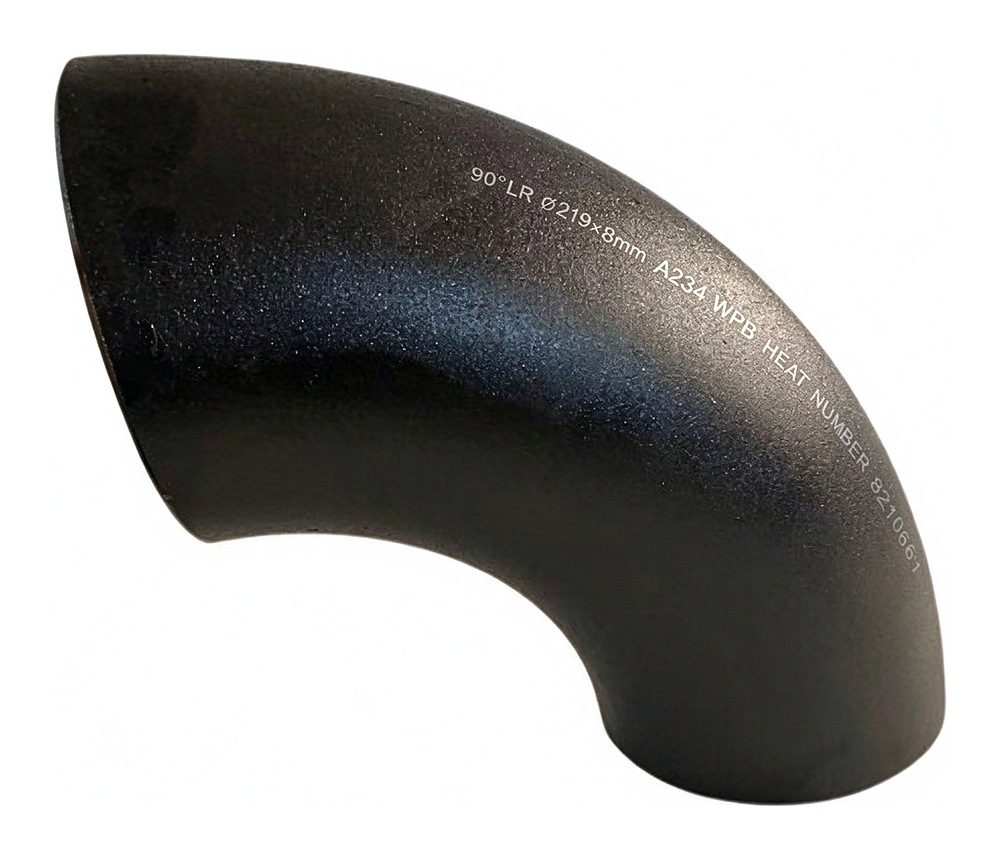
Mingyang Pipe Fittings Co., Ltd. supplies carbon steel flanges to ASME B16.5 and butt weld fittings to ASME B16.9 from Cangzhou, China, with mill test certificates to EN 10204 3.1 on request. If you are clearing a first shipment into Sohar or Salalah, send the line items and we will confirm the twelve-digit code and the documents that travel with them. mingyangpiping.com