
A buyer sends one inquiry to a mill in Rajkot and another to us in Cangzhou. A105 weld neck, 6 inch, Class 150, raised face, ASME B16.5, 200 pieces. Two quotes come back and the Chinese one is lower. Then comes the question we get asked most often: why.
It is a fair question, and the honest answer is not “because we are cheaper”. Four things create that gap. Three of them are real savings in the way the part is made. The fourth is sometimes a step that was skipped, and the price alone will not tell you which of the four you are looking at.
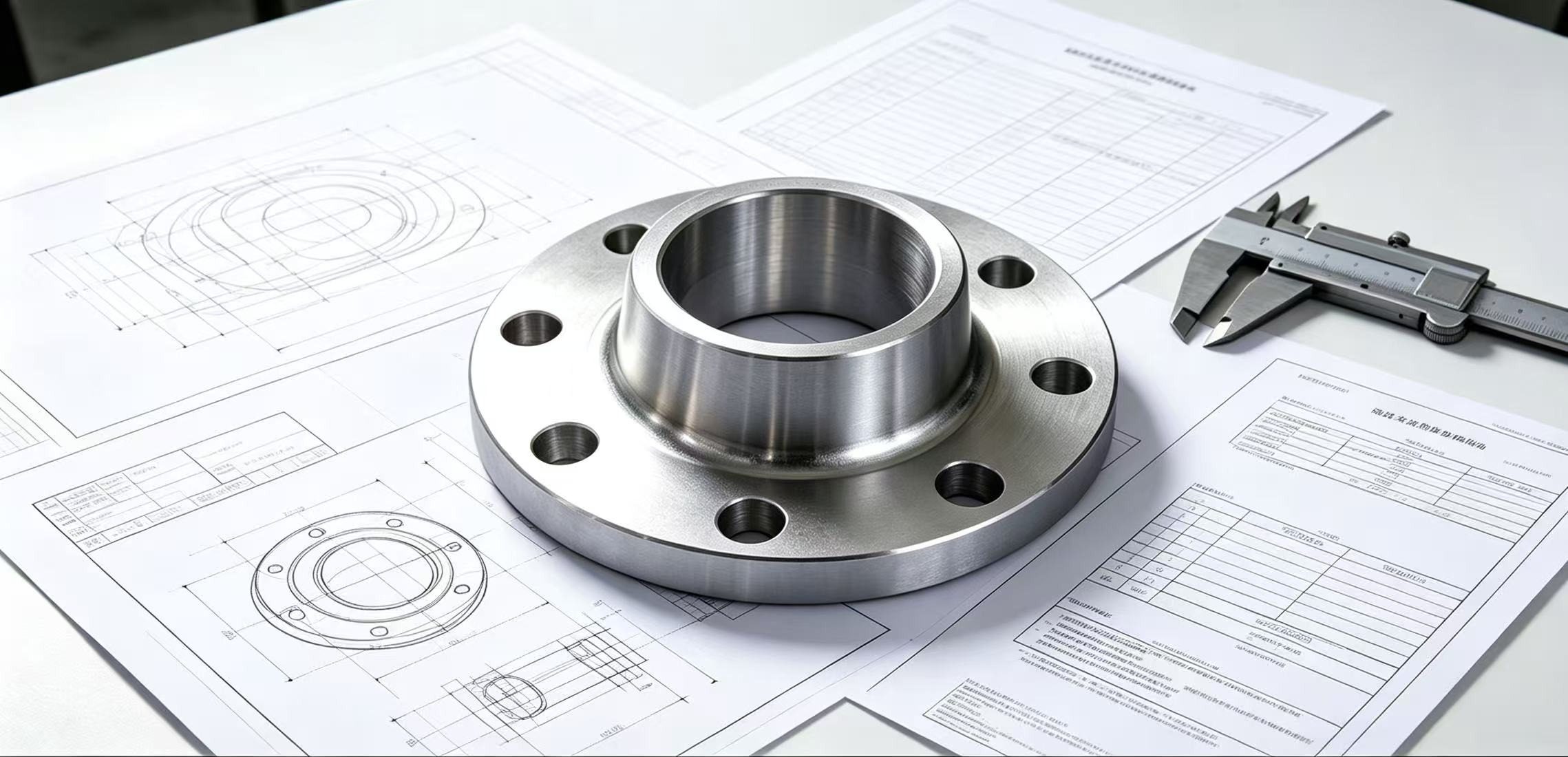
The billet is cheaper before the forging starts
A flange begins as square billet. China produces more steel than any other country, and several billet suppliers compete for the same forging shop. A shop here can call three of them in the morning, get three prices by lunch, and have the truck in the yard the next day. The billet price moves every day with the mill price, and the flange is quoted off the billet that was actually booked.
That competition is the base of the difference. Everything that comes after it is smaller.
The fixed cost is spread over more pieces
A flange die is not costly by itself. It becomes costly when it runs fifty pieces. Shops that group orders by size and run a die until the billet is used up carry only a thin slice of the die cost on each piece. The furnace and the press work the same way: a full load spreads the gas over more tonnes than half a load, and a setup that runs for two shifts costs less per piece than one that runs for two hours.
This is also why Chinese prices on a mixed list can look uneven. A 2 inch and a 24 inch do not carry the same die burden, and the discount pattern in the quote follows the die, not the weight.
None of this changes the metallurgy. It changes how much of the fixed cost lands on your invoice.
Sometimes the saving is a step that was skipped
This is the one to watch. Normalising and tempering cost money, and a flange that skipped them still measures correctly on a Vernier. It passes a dimension check and fails later, at a third party test or in service.
The second version of this is mixed origin inside one lot. Bought-out fittings get packed with a shop’s own goods, and the certificate that arrives covers the heat of the shop’s own pieces. You cannot see this on the packing list. You see it on the stamps.
If your supplier cannot tell you which furnace the heat came out of, the lower price is not a saving yet. It is unfinished work.
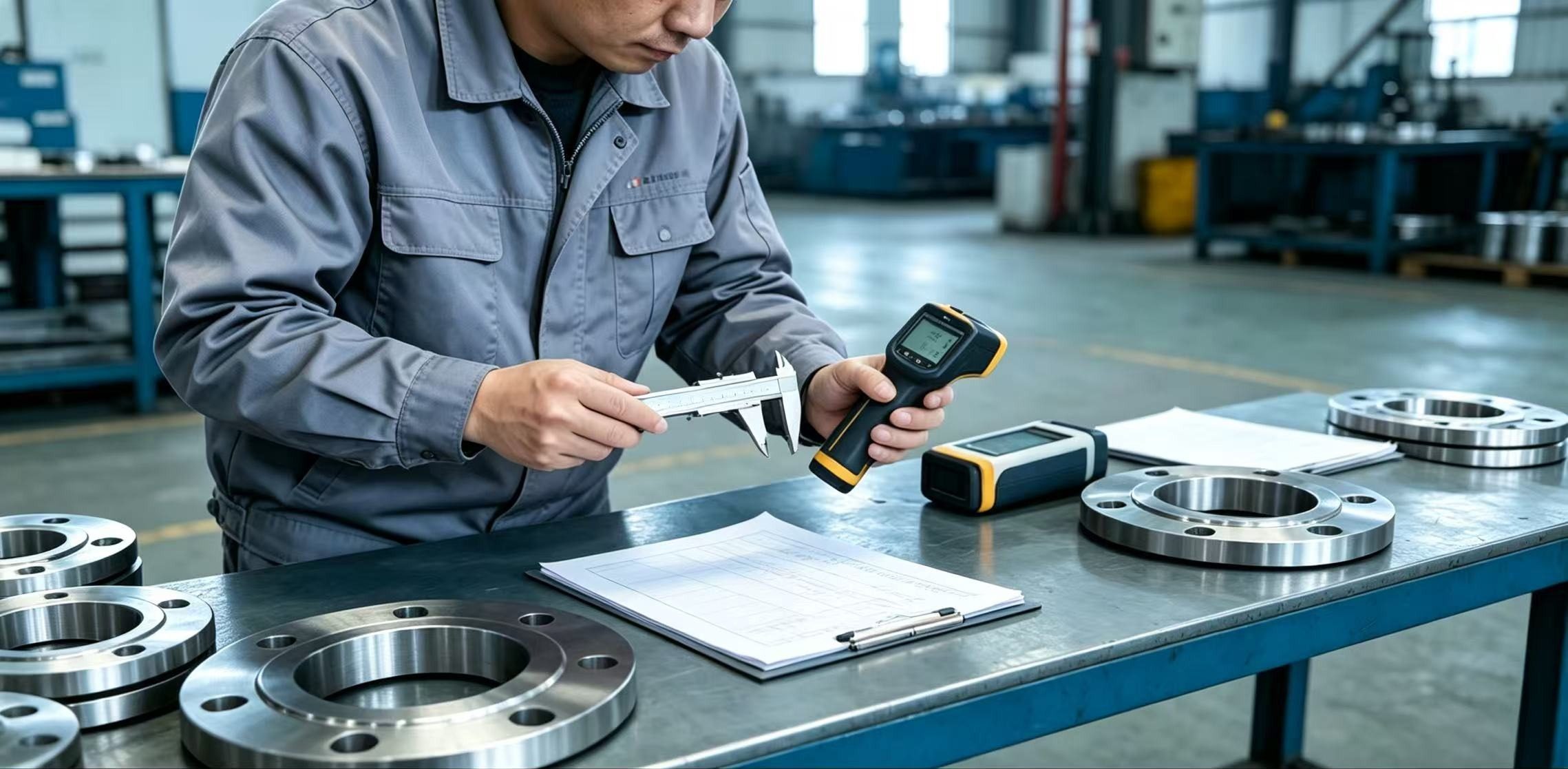
What we do at the stamping station
Three steps, and they are dull on purpose.
One heat, one number. The furnace is charged by heat and the charging sheet stays with the batch from loading to unloading. That number is what the pieces carry out of the shop, not a number assigned at packing time.
The stamp goes on with the size and the grade, at the same station, set once per heat. Size, grade and heat number are struck together. Pieces from different heats do not pass through the same setting, so a mixed lot cannot pick up the wrong number.
The 3.1 certificate is written from the furnace record, not from the sales order. If a buyer wants 3.2, we book the third party and they witness the test, and the certificate carries their stamp next to ours.
What to ask any supplier before you switch
Four questions, none of which cost the supplier anything to answer.
Which mill did the billet come from. Whether normalising is done in house or bought out. Can I see the charging sheet for the heat on the certificate. And one photo of the stamp on the goods beside the certificate number.
A shop that forges and heat treats its own goods answers all four in one email. When the answers arrive slowly, or arrive without the photo, that delay is the answer.
We are in Cangzhou and our main export market is the Gulf. Orders there usually come mixed: one container, many sizes, short counts on each line. More sizes in one box means more heats to keep apart, which is why the stamping station gets the attention here.
The price is only half of the comparison. The other half sits on the goods, where the number stamped on the flange either matches the certificate or it does not, and no quote will tell you that in advance.
If you are weighing a Chinese quote against an Indian one, send me the list. It will come back priced to ASME B16.5 and B16.9, with weights and packing on the same sheet.
Janie
Mingyang Pipe Fittings Co., Ltd.
Cangzhou, China
mingyangpiping.com
janie@mingyangpiping.com
WhatsApp +86 15832712953
Our factory holds API Q1 and ISO 9001.