
Stainless Steel Weld Neck Flanges
 1 / 4
Description
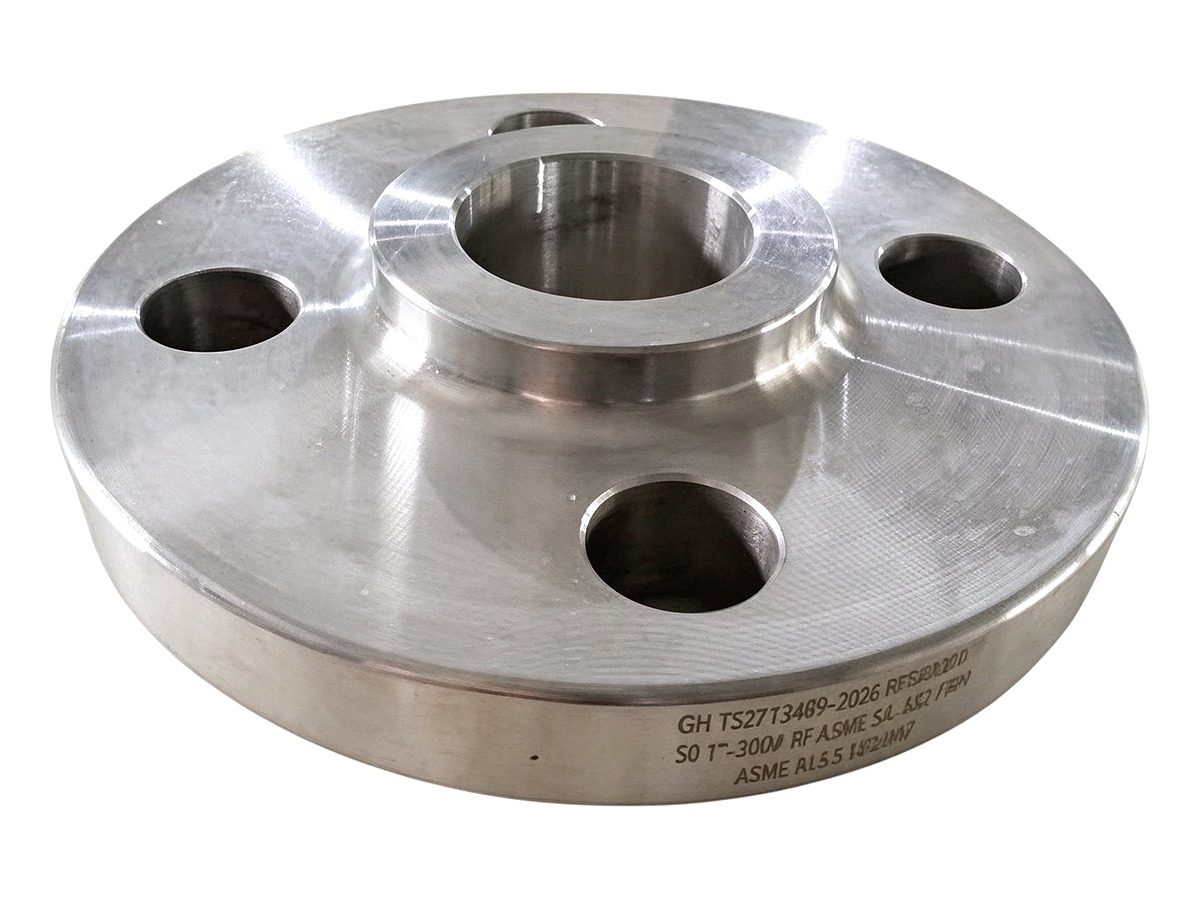
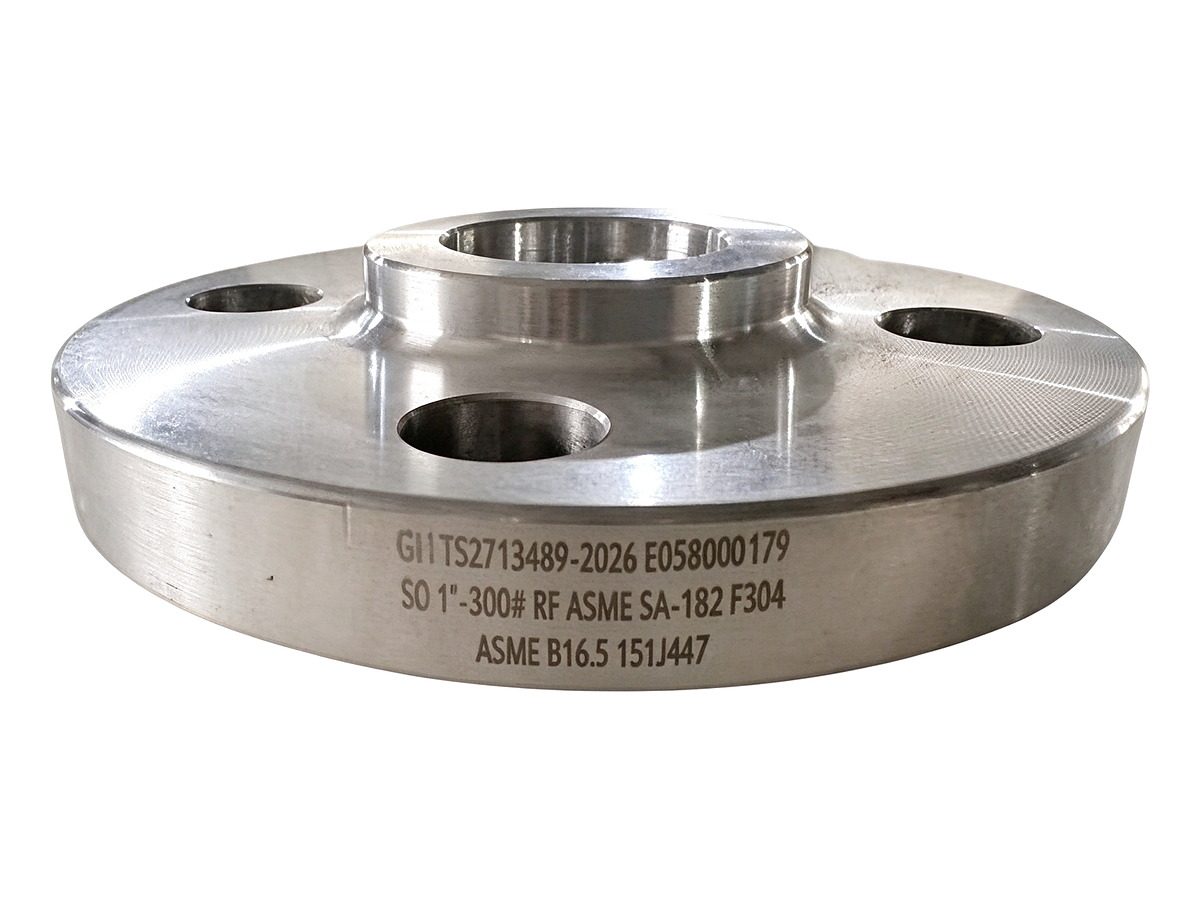
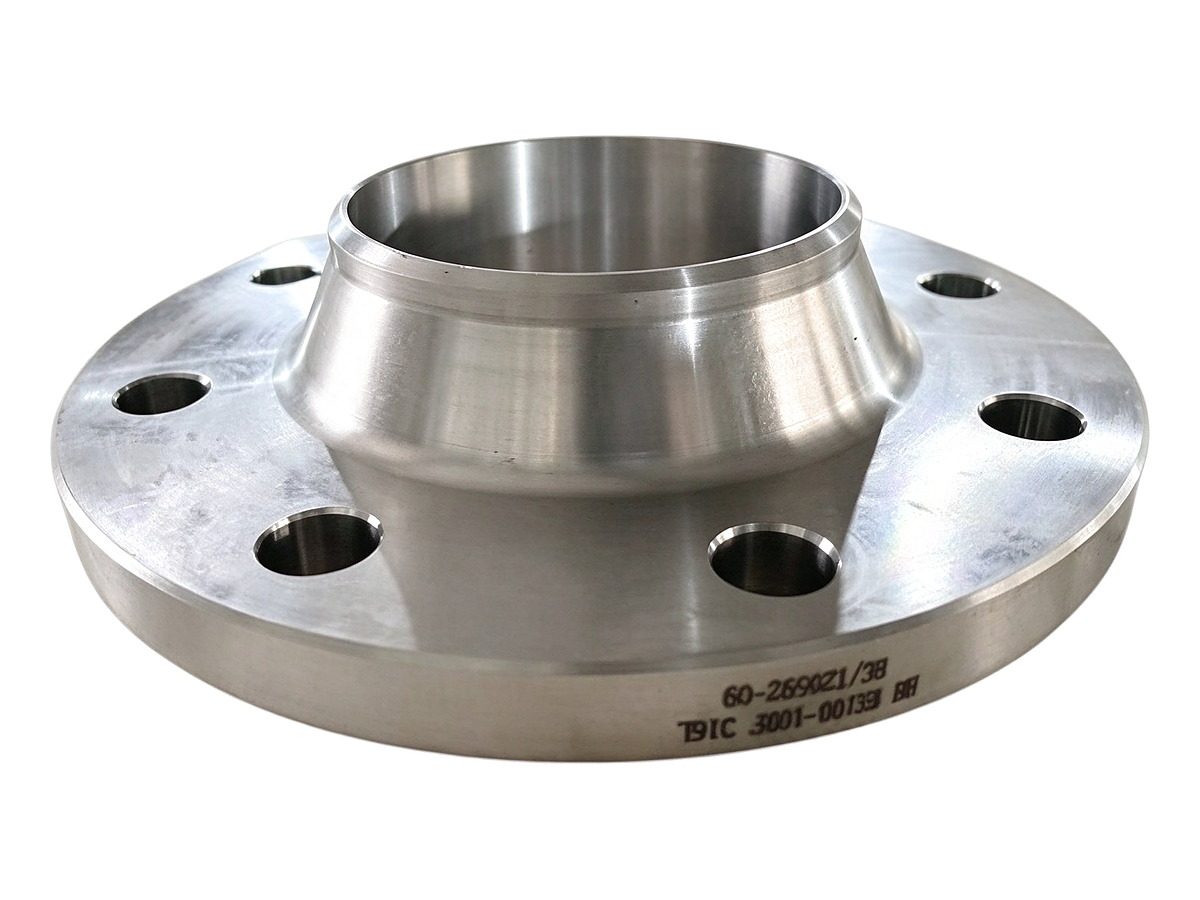
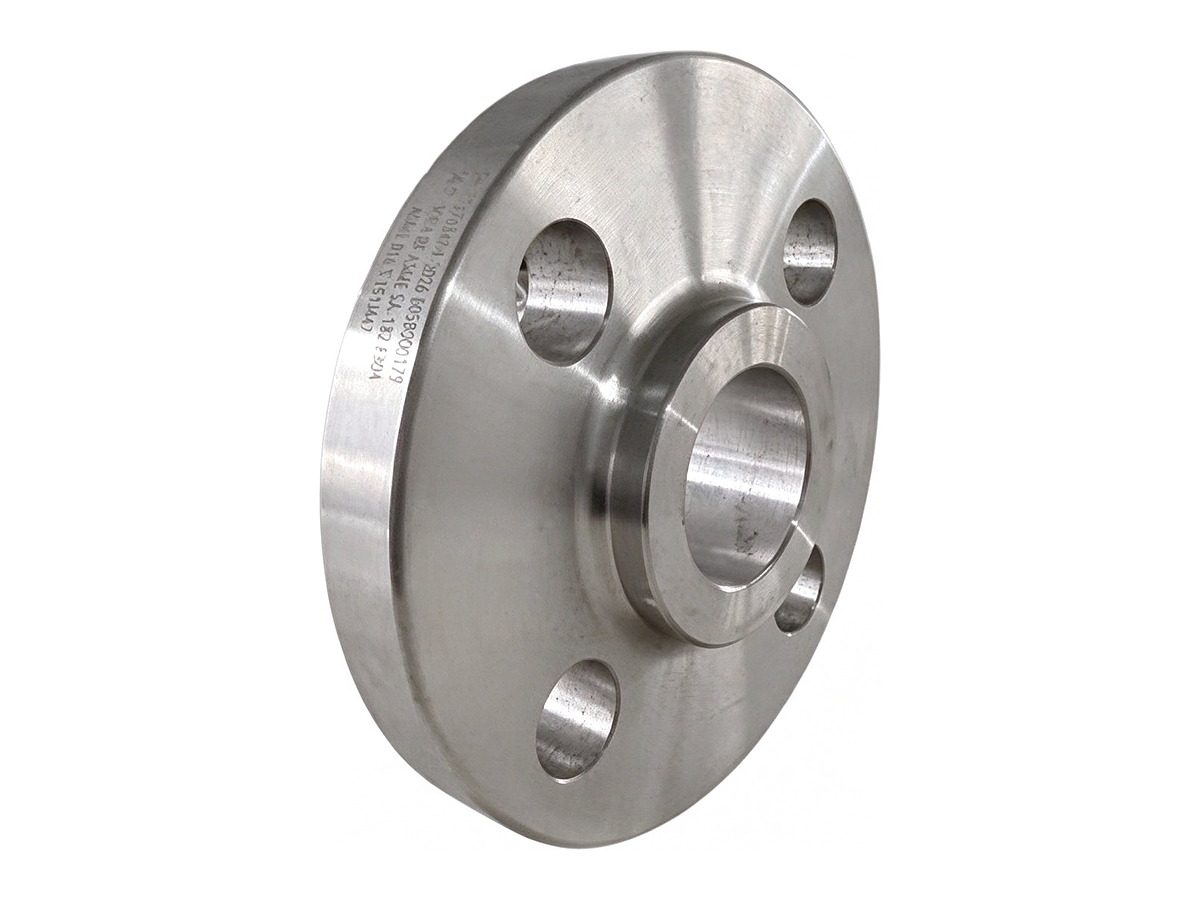
A weld neck flange is the flange specified when the joint matters. It has a long tapered hub that is butt welded to the pipe, so the load transfers gradually from the flange into the pipe wall instead of concentrating at a single line. The butt weld is a full penetration weld, which means it can be examined by radiography or ultrasonics — something no fillet welded flange can offer. We manufacture stainless steel weld neck flanges to ASME B16.5, in ASTM A182 grades F304, F304L, F316 and F316L, in Class 150 through Class 2500, with RF, FF and RTJ facings. Unlike butt weld fittings, flanges do carry a pressure class, and the class is selected from the pressure-temperature rating for the material group. The bore is machined to match the pipe schedule you specify, so the pipe schedule must be stated at quotation stage. Flanges are supplied in the solution annealed condition and pickled, with the sealing face finish machined after heat treatment. Every shipment is accompanied by an EN 10204 3.1 Material Test Certificate traceable to the heat number.
Specifications
| Materials | ASTM A182 F304, F304L, F316, F316L (forged austenitic stainless steel). Stabilised grades F321 and F347 for high temperature service, and duplex grades F51 (2205) and F53 (2507), on request. |
| Standards | ASME B16.5 (NPS 1/2 inch to 24 inch); ASME B16.47 (larger sizes, on request). Material to ASTM A182 / ASME SA182. Pipe schedules to ASME B36.19M. |
| Type | Weld neck flange (WN) — long tapered hub, butt welded to the pipe |
| Pressure Class | Class 150, 300, 400, 600, 900, 1500, 2500. Selected against the pressure-temperature rating for the material group in ASME B16.5, at your design pressure and design temperature. |
| Facing | RF (raised face), FF (flat face), RTJ (ring type joint). The facing must be specified before machining and cannot be changed afterwards. |
| Size Range | NPS 1/2 inch to 24 inch to ASME B16.5. Larger sizes to ASME B16.47 on request. |
| Bore | Machined to the pipe schedule you specify — 5S, 10S, 40S or 80S to ASME B36.19M. The schedule must be stated at quotation stage; the bore is machined to it and cannot be corrected later. |
| Heat Treatment | Solution annealed, as required by ASTM A182. The sealing face is finish machined after heat treatment. |
| Surface Treatment | Pickled and passivated; sealing face machine finished. No anti-rust oil is applied to stainless flanges. Cleaning to ASTM A380 and passivation to ASTM A967 available on request. |
| Examination | PMI testing as standard on request; intergranular corrosion test to ASTM A262 Practice E, ultrasonic examination, and hardness testing on request at quotation stage |
| MOQ | Negotiable based on grade, size, class and quantity. Standard grades in common sizes are workable in small quantities; high class ratings, large sizes and duplex grades carry higher minimums. |
| Lead Time | Standard grades in common sizes and classes typically 15-25 days, subject to mill schedule; duplex grades, high class ratings and large sizes 30-45 days. Shipping time additional depending on destination. |
| Price Validity | Shorter than for carbon steel, because stainless raw material cost moves with the nickel and molybdenum market. Please confirm validity when you request a quotation. |
| HS Code | 7307.21 (flanges of stainless steel); GCC Common External Tariff 5% on CIF value for Oman and UAE import |
| Customization | Non-standard dimensions, special bore to a specified schedule, special grades, RTJ groove to specification, and custom marking are supported. Technical drawings or detailed specifications required for custom orders. |
| Documents | EN 10204 Type 3.1 MTC (standard with every shipment); PMI report, intergranular corrosion test report, and NDT reports on request at quotation stage |
Application Scenarios
Commonly supplied to the following industries and applications:
- Chemical and petrochemical process plants — corrosive media, acids, caustics and solvents
- Desalination and water treatment — high chloride service, where grade selection is driven by chloride content and temperature
- Offshore platforms and marine installations — salt-laden atmosphere and seawater systems
- Oil and gas — corrosion resistant process lines, chemical injection, and sour service with the correct grade and hardness
- Food, beverage and pharmaceutical — process lines requiring a cleanable, non-contaminating surface
- Power generation — condensate, demineralised water, and flue gas desulphurisation systems
- LNG and cryogenic service — austenitic grades retain toughness at low temperature
- High pressure and cyclic duty — where a full penetration butt weld can be examined, unlike a fillet weld
- EPC contractors and overseas infrastructure projects — water transmission mains, district cooling networks, airport and industrial park piping, supplied to the project specification and the document package your QA team requires
Where the line carries a non-corrosive fluid at ambient temperature and the joint is not critical, a carbon steel flange is usually the more economical choice.
Samples, Third-Party Inspection and Test Records
Sample pieces can be produced before the batch runs, so that dimensions, bevel profile and fit-up can be checked on your side first. Sample cost and delivery time are advised with the quotation, based on size and material.
Buyer-nominated inspection is supported. SGS, BV, Intertek or your own inspector can witness dimensional checking, marking, coating and container loading at the production site, and we provide the documents and site access needed for the visit. Where a visit is not practical, the same checks can be followed through a live video walkthrough. Third-party inspection fees are normally carried by the buyer.
Non-destructive testing and hydrostatic test records are available on request and can be shipped with the order, together with the EN 10204 3.1 material certificate, the heat number and marking list, dimensional records, packing list and certificate of origin. Tell us at enquiry stage which records your project requires, and they are included in the quotation.
Weld Neck vs Slip-On vs Blind
| Criterion | Weld Neck (WN) | Slip-On (SO) | Blind (BL) |
|---|---|---|---|
| Connection to Pipe | Butt weld, full penetration | Two fillet welds, socket fit over the pipe | No bore — closes the line end |
| Weld Examination | Can be examined by RT or UT | Fillet welds cannot be examined by RT | Not applicable |
| Strength Under Load | Highest — the hub transfers load gradually | Lower — load concentrates at the fillet welds | Closes the line; not a connection |
| Suitability for Cyclic Duty | Recommended | Not recommended for cyclic or thermal loading | Not applicable |
| Pressure Class Range | Class 150 to 2500 | Class 150 to 600 | Class 150 to 2500 |
| Pipe Schedule Required | Yes — bore is machined to the schedule | No — the flange fits over the pipe outside diameter | No bore |
| Alignment | Requires more care to fit | Easier to align | Not applicable |
| Cost | Higher | Lower | Depends on class and size |
| Typical Use | Critical lines, high pressure, high temperature, cyclic duty | Low pressure, non-cyclic, utility and general service | Line termination, isolation, hydrotest |
Selection Logic
Grade Selection
Buyer FAQ
Q1: Why is this flange A182 and not A403?
A1: Because they cover different product forms, and mixing them up is a common specification error. ASTM A182 is the specification for forged or rolled alloy and stainless steel flanges, forged fittings and valves — so flanges are A182. ASTM A403 is the specification for wrought austenitic stainless piping fittings — elbows, tees, reducers and caps — which are made from pipe, not forged. So on a stainless line the flange is A182 F316L and the elbow is A403 WP316L. Same family of alloy, different specification, and both callouts are needed on the order. If a supplier quotes A403 for a flange, or A182 for an elbow, that is a red flag.
Q2: Flanges have a pressure class but elbows do not. Why?
A2: Because a flange is a complete pressure-containing component. It has its own bolting, its own gasket, and a defined pressure-temperature rating published in ASME B16.5 for its material group, so it carries a class: Class 150, 300, 600, 1500, 2500 and so on. An elbow is a piece of the pipe: it has no bolting and no gasket, and its wall thickness is simply the pipe schedule. So you order a Class 300 flange, but you order an elbow by schedule — SCH 40S, for example. The two must then be compatible, which is why we ask for the design pressure and temperature on the flange and the pipe schedule on the fittings.
Q3: Should the flange grade match the pipe grade?
A3: Yes, in almost every case. If the line is 316L, the flanges should be F316L. Mixing a 304 flange into a 316L line leaves the lowest alloy component as the weak point, and it also creates a small galvanic couple between two dissimilar metals. The welding procedure changes too, because the filler metal has to suit both. There is one common exception: where a 304 flange is used on a 316 line purely for cost and the service is mild, but we do not recommend it as a default. Tell us the pipe material and we will match the flange to it, and the MTC will show both.
Q4: Can these flanges be used in seawater or desalination service?
A4: With the right grade, yes, and this is one of the most common applications in the Gulf. F316L is widely used on desalination lines, but it is not immune: in warm chloride service it can still suffer pitting and crevice corrosion, and in the crevice at the gasket face it is especially vulnerable. Where chloride content, temperature, or both are high, a duplex grade such as F51 (2205) is the usual specification. We will not quote a grade for seawater duty without knowing the chloride level and the operating temperature, because guessing here causes failures, not complaints.
Q5: RF or RTJ — which facing do I need?
A5: Raised face, RF, is the general purpose choice and is used with a spiral wound gasket across the common pressure classes. Ring type joint, RTJ, uses a metal ring in a machined groove and is specified for higher pressure classes and for high temperature or hydrocarbon service, where a soft gasket would not hold. The facing is machined into the flange, so it has to be decided before manufacture and cannot be changed afterwards. If your piping class already specifies the facing, follow it. If not, tell us the design pressure, temperature and fluid, and we will confirm what is normally used at that class.
Q6: Are these flanges forged or cast?
A6: Forged, to ASTM A182. This matters more than it sounds. A forged flange is worked from solid stock, so the grain structure follows the shape of the forging and the material is sound. A cast flange, to ASTM A351, is poured into a mould, and castings can carry porosity and inclusion defects that only show up under examination or in service. For critical service, high pressure, and where radiographic examination is specified, forged is the correct callout, and it is what ASME B16.5 pressure ratings are built around. We do not substitute a casting for a forging without telling you.
Q7: What grade should I use for high temperature service?
A7: Above roughly 425°C, or anywhere the line sees sustained heat, standard 304 and 316 grades become vulnerable to sensitisation, where chromium carbides form at the grain boundaries over time. The usual answer is a stabilised grade — F321 or F347 — where titanium or niobium is added to tie up the carbon so it cannot form chromium carbides. These are supplied on request. Tell us the design temperature and whether the service is continuous or intermittent, and we will confirm whether a stabilised grade is needed rather than letting you find out after commissioning.
Q8: Can a stainless flange be bolted to a carbon steel line?
A8: It can, and it is done, but there is a catch worth knowing. When two dissimilar metals are in contact in the presence of an electrolyte, you get galvanic corrosion, and the less noble metal corrodes faster — in this case the carbon steel. On a flanged joint this shows up as accelerated corrosion at the carbon steel side. The standard mitigation is to insulate the joint: insulating gasket sets, insulating sleeves around the bolts, and isolation washers. The second issue is the bolting itself — if you use stainless flanges, specify matching bolting such as ASTM A193 B8M with A194 8M nuts for 316 service, rather than mixing in carbon steel bolts that will corrode. Tell us what is on the other side of the joint and we will advise on the isolation set.
Q9: Why is there no anti-rust oil on stainless flanges?
A9: Because it is unnecessary and it creates a problem. Stainless does not need an oil film to protect it in transit, and an oil film on a flange face has to be removed before assembly, or it contaminates the gasket seating area and can affect the joint. More importantly, oil and the packaging it comes with can carry contaminants onto the surface. We ship stainless flanges pickled and passivated, with the machined sealing face protected by a mechanical cover or a suitable protector rather than grease, and packed separately from carbon steel so no free iron is picked up in transit.
Q10: What is the HS Code and tariff for stainless flanges imported into Oman and the UAE?
A10: Stainless steel flanges are classified under HS Code 7307.21 (flanges of stainless steel). This is different from carbon steel flanges, which fall under 7307.91, and different again from stainless butt weld fittings, which fall under 7307.23. GCC Common External Tariff is 5% on CIF value for goods imported into Oman and the UAE. Standard import documentation includes Commercial Invoice, Packing List, Bill of Lading, Certificate of Origin, MTC 3.1, and Fumigation Certificate for wooden packaging. We can provide full export documentation support on request.
Q11: What sizes and pressure ratings are available for stainless steel weld neck flanges?
A11: NPS 1/2 inch to 24 inch to ASME B16.5, with larger sizes to ASME B16.47 on request. Class 150, 300, 400, 600, 900, 1500 and 2500. Sizes and ratings outside this range can be reviewed against your drawing. The exact range confirmed for your order is stated in the quotation.
Q12: How is the wall thickness determined for stainless steel weld neck flanges?
A12: Flange dimensions, including hub and thickness, are fixed by the ASME standard for the size and pressure class you specify. They are not chosen separately. The matching pipe schedule is confirmed at quotation stage.
Q13: What is the lead time for stainless steel weld neck flanges?
A13: Standard sizes in regular material normally take 7-15 days. Non-standard sizes, special materials and custom orders take longer. The exact lead time for this product is given in the specification table on this page and is confirmed in writing with your quotation. Sea freight to the Gulf is additional and depends on the destination port. All lead times are subject to the production schedule at the time of order.
Q14: Is there a minimum order quantity for stainless steel weld neck flanges?
A14: There is no fixed minimum. Standard items can ship from a single pallet, and custom production is normally quoted at full container load. Small trial orders and mixed-size orders are accepted. Send your size list and we will confirm what can be combined in one shipment.
Q15: How are stainless steel weld neck flanges packed and marked?
A15: Flanges and fittings are packed in plywood cases or on plywood pallets with anti-rust treatment, strapped and stretch-wrapped for sea freight. Each piece carries the heat number, and the material, size, standard and pressure class or schedule are marked on the item or on the case label. Shipping marks are printed to your specification, and a fumigation certificate is provided where wooden packaging is used.
Q16: Can you produce stainless steel weld neck flanges to our drawing or to non-standard specifications?
A16: Yes. Send the drawing, material, quantity and the applicable standard, and we will confirm feasibility and quote. Non-standard angles, non-standard schedules, special materials and special dimensions are produced against your drawing. The details we need to quote are listed on our custom service page.
Engineer's Note
The following technical guidance reflects the perspective of a senior piping engineer with extensive experience in industrial piping system design.
The weld neck flange is the default choice wherever the joint is critical, and in stainless it is chosen for a second reason as well: the butt weld can be examined. A fillet welded flange cannot be radiographed, and on a corrosive or high pressure line an unexaminable weld is a risk you carry for the life of the plant. The following factors should drive your specification:
- Get the Material Callout Right
- Flanges are ASTM A182; butt weld fittings are ASTM A403
- Both appear on the same order and both are needed
- A supplier quoting A403 for a flange is a red flag
- Flanges Have a Class, Fittings Have a Schedule
- The flange class is selected from the ASME B16.5 pressure-temperature rating for the material group
- The fitting wall thickness is the pipe schedule
- Both must be stated, and both must suit the design pressure and temperature
- Match the Flange Grade to the Pipe
- A 304 flange on a 316L line becomes the weak point
- Dissimilar metals in contact also create a galvanic couple
- The welding procedure changes when grades are mixed
- Forged, Not Cast
- ASTM A182 forgings are sound; castings can carry porosity
- ASME B16.5 ratings are built around forged material
- Specify forged wherever examination or critical service is involved
- The Grade Follows the Chlorides and the Temperature
- F304L for general process, fresh water and cryogenic duty
- F316L for chemical, coastal and moderate chloride service
- Duplex F51 for seawater, brine and high chloride at temperature
- Stabilised F321 or F347 for sustained high temperature
- Decide the Facing Before Manufacture
- RF for general duty with a spiral wound gasket
- RTJ for higher classes and high temperature hydrocarbon service
- The facing is machined in and cannot be changed afterwards
- Watch the Interfaces
- Stainless bolted to carbon steel creates a galvanic couple; insulate the joint
- Specify matching bolting, such as A193 B8M with A194 8M for 316 service
- Do not let carbon steel bolts become the corroding component
- Common Mistakes to Avoid
- Calling out A403 for a flange, or A182 for an elbow
- Asking for a pipe schedule instead of a pressure class on the flange
- Mixing a 304 flange into a 316L line to save money
- Leaving the facing undecided until after manufacture
- Specifying 316L for warm seawater without checking chloride and temperature
- Bolting stainless to carbon steel with no isolation and no thought about the bolts
For project-specific engineering support, please share your service conditions (size, class, facing, grade, design pressure and temperature, fluid composition, chloride content, pipe schedule, mating material, and examination requirements) and we will review the specification and provide a written recommendation.
Frequently Asked Questions
Why is this flange A182 and not A403?
Because they cover different product forms, and mixing them up is a common specification error. ASTM A182 is the specification for forged or rolled alloy and stainless steel flanges, forged fittings and valves, so flanges are A182. ASTM A403 is the specification for wrought austenitic stainless piping fittings such as elbows, tees, reducers and caps, which are made from pipe rather than forged. So on a stainless line the flange is A182 F316L and the elbow is A403 WP316L. Same family of alloy, different specification, and both callouts are needed on the order. If a supplier quotes A403 for a flange, or A182 for an elbow, that is a red flag.
Flanges have a pressure class but elbows do not. Why?
Because a flange is a complete pressure-containing component. It has its own bolting, its own gasket, and a defined pressure-temperature rating published in ASME B16.5 for its material group, so it carries a class: Class 150, 300, 600, 1500, 2500 and so on. An elbow is a piece of the pipe: it has no bolting and no gasket, and its wall thickness is simply the pipe schedule. So you order a Class 300 flange, but you order an elbow by schedule. The two must then be compatible, which is why we ask for the design pressure and temperature on the flange and the pipe schedule on the fittings.
Should the flange grade match the pipe grade?
Yes, in almost every case. If the line is 316L, the flanges should be F316L. Mixing a 304 flange into a 316L line leaves the lowest alloy component as the weak point, and it also creates a small galvanic couple between two dissimilar metals. The welding procedure changes too, because the filler metal has to suit both. Tell us the pipe material and we will match the flange to it, and the MTC will show both.
Can these flanges be used in seawater or desalination service?
With the right grade, yes, and this is one of the most common applications in the Gulf. F316L is widely used on desalination lines, but it is not immune: in warm chloride service it can still suffer pitting and crevice corrosion, and in the crevice at the gasket face it is especially vulnerable. Where chloride content, temperature, or both are high, a duplex grade such as F51 (2205) is the usual specification. We will not quote a grade for seawater duty without knowing the chloride level and the operating temperature, because guessing here causes failures, not complaints.
RF or RTJ — which facing do I need?
Raised face, RF, is the general purpose choice and is used with a spiral wound gasket across the common pressure classes. Ring type joint, RTJ, uses a metal ring in a machined groove and is specified for higher pressure classes and for high temperature or hydrocarbon service, where a soft gasket would not hold. The facing is machined into the flange, so it has to be decided before manufacture and cannot be changed afterwards. If your piping class already specifies the facing, follow it. If not, tell us the design pressure, temperature and fluid, and we will confirm what is normally used at that class.
Are these flanges forged or cast?
Forged, to ASTM A182. This matters more than it sounds. A forged flange is worked from solid stock, so the grain structure follows the shape of the forging and the material is sound. A cast flange, to ASTM A351, is poured into a mould, and castings can carry porosity and inclusion defects that only show up under examination or in service. For critical service, high pressure, and where radiographic examination is specified, forged is the correct callout, and it is what ASME B16.5 pressure ratings are built around. We do not substitute a casting for a forging without telling you.
What grade should I use for high temperature service?
Above roughly 425 degrees Celsius, or anywhere the line sees sustained heat, standard 304 and 316 grades become vulnerable to sensitisation, where chromium carbides form at the grain boundaries over time. The usual answer is a stabilised grade, F321 or F347, where titanium or niobium is added to tie up the carbon so it cannot form chromium carbides. These are supplied on request. Tell us the design temperature and whether the service is continuous or intermittent, and we will confirm whether a stabilised grade is needed rather than letting you find out after commissioning.
Can a stainless flange be bolted to a carbon steel line?
It can, and it is done, but there is a catch worth knowing. When two dissimilar metals are in contact in the presence of an electrolyte, you get galvanic corrosion, and the less noble metal corrodes faster, in this case the carbon steel. On a flanged joint this shows up as accelerated corrosion at the carbon steel side. The standard mitigation is to insulate the joint with insulating gasket sets, insulating sleeves around the bolts, and isolation washers. The second issue is the bolting itself: if you use stainless flanges, specify matching bolting such as ASTM A193 B8M with A194 8M nuts for 316 service, rather than mixing in carbon steel bolts that will corrode. Tell us what is on the other side of the joint and we will advise on the isolation set.
Why is there no anti-rust oil on stainless flanges?
Because it is unnecessary and it creates a problem. Stainless does not need an oil film to protect it in transit, and an oil film on a flange face has to be removed before assembly, or it contaminates the gasket seating area and can affect the joint. We ship stainless flanges pickled and passivated, with the machined sealing face protected by a mechanical cover or a suitable protector rather than grease, and packed separately from carbon steel so no free iron is picked up in transit.
What is the HS Code and tariff for stainless flanges imported into Oman and the UAE?
Stainless steel flanges are classified under HS Code 7307.21 (flanges of stainless steel). This is different from carbon steel flanges, which fall under 7307.91, and different again from stainless butt weld fittings, which fall under 7307.23. GCC Common External Tariff is 5% on CIF value for goods imported into Oman and the UAE. Standard import documentation includes Commercial Invoice, Packing List, Bill of Lading, Certificate of Origin, MTC 3.1, and Fumigation Certificate for wooden packaging. We can provide full export documentation support on request.
What sizes and pressure ratings are available for stainless steel weld neck flanges?
NPS 1/2 inch to 24 inch to ASME B16.5, with larger sizes to ASME B16.47 on request. Class 150, 300, 400, 600, 900, 1500 and 2500. Sizes and ratings outside this range can be reviewed against your drawing. The exact range confirmed for your order is stated in the quotation.
How is the wall thickness determined for stainless steel weld neck flanges?
Flange dimensions, including hub and thickness, are fixed by the ASME standard for the size and pressure class you specify. They are not chosen separately. The matching pipe schedule is confirmed at quotation stage.
What is the lead time for stainless steel weld neck flanges?
Standard sizes in regular material normally take 7-15 days. Non-standard sizes, special materials and custom orders take longer. The exact lead time for this product is given in the specification table on this page and is confirmed in writing with your quotation. Sea freight to the Gulf is additional and depends on the destination port. All lead times are subject to the production schedule at the time of order.
Is there a minimum order quantity for stainless steel weld neck flanges?
There is no fixed minimum. Standard items can ship from a single pallet, and custom production is normally quoted at full container load. Small trial orders and mixed-size orders are accepted. Send your size list and we will confirm what can be combined in one shipment.
How are stainless steel weld neck flanges packed and marked?
Flanges and fittings are packed in plywood cases or on plywood pallets with anti-rust treatment, strapped and stretch-wrapped for sea freight. Each piece carries the heat number, and the material, size, standard and pressure class or schedule are marked on the item or on the case label. Shipping marks are printed to your specification, and a fumigation certificate is provided where wooden packaging is used.
Can you produce stainless steel weld neck flanges to our drawing or to non-standard specifications?
Yes. Send the drawing, material, quantity and the applicable standard, and we will confirm feasibility and quote. Non-standard angles, non-standard schedules, special materials and special dimensions are produced against your drawing. The details we need to quote are listed on our custom service page.