
 1 / 3
Description
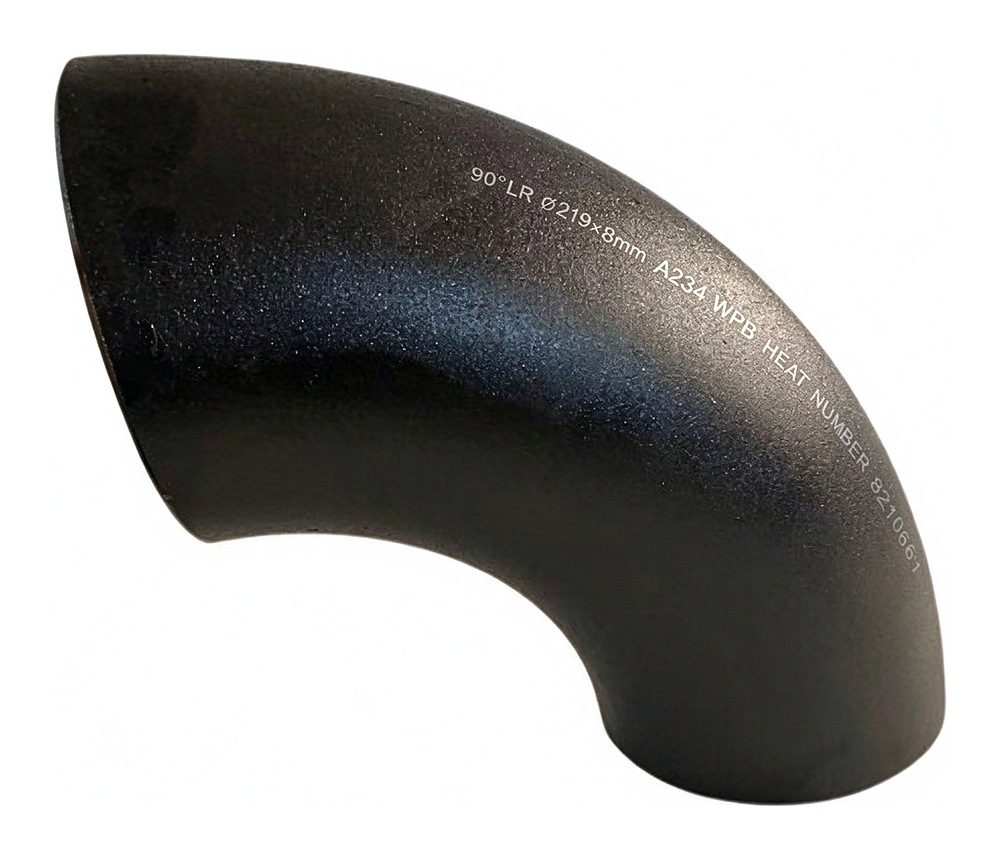
A 90 degree elbow turns a pipeline through a right angle. It is welded to the pipe with a full penetration butt weld, so the fitting and the pipe become one continuous pressure boundary. No thread, no socket cavity, no separate seal to leak.
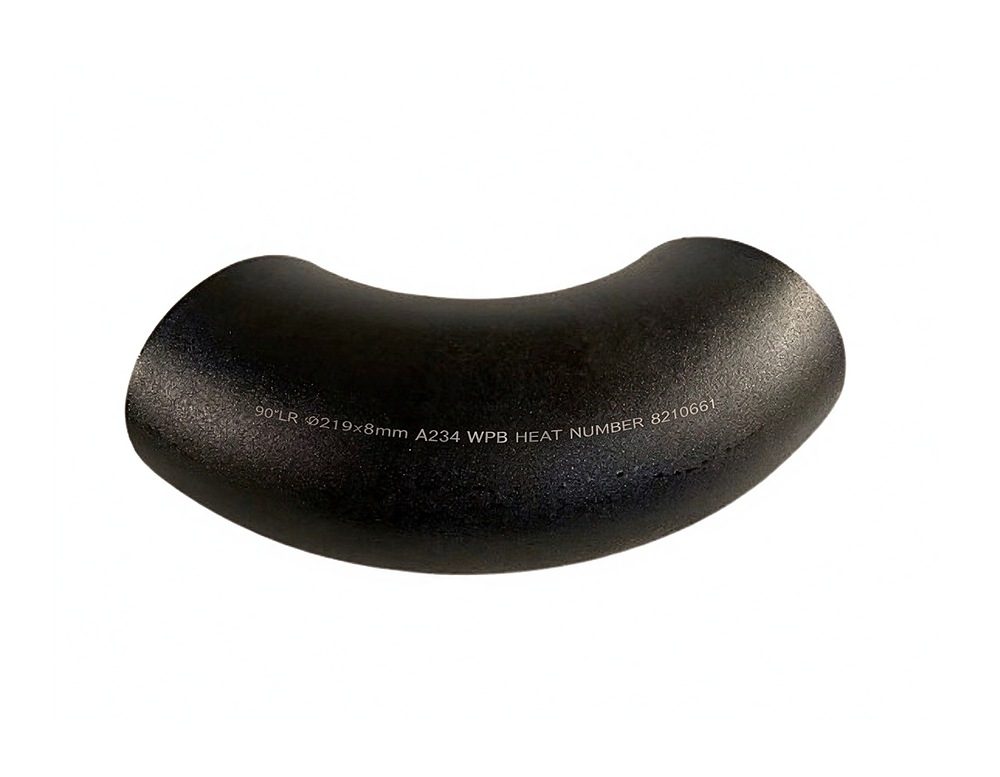
We manufacture carbon steel 90° elbows in long radius (LR, centerline radius 1.5 × NPS) and short radius (SR, centerline radius 1.0 × NPS), to ASME B16.9 and ASME B16.28, in ASTM A234 WPB.
Long radius is the normal choice for process lines: lower pressure drop, less erosion at the turn. Short radius is used where the space is tight.
Butt weld fittings carry no pressure class. Wall thickness comes from the pipe schedule, so the schedule has to be stated at quotation stage. Every shipment leaves with an EN 10204 3.1 material certificate, traceable to the heat number.
90° Butt Weld Elbows (Long Radius and Short Radius)
Specifications
| Item | Specification |
|---|---|
| Product | 90° butt weld elbow, long radius (LR) and short radius (SR) |
| Material | ASTM A234 WPB (carbon steel) |
| Standard | ASME B16.9 (long radius); ASME B16.28 (short radius) |
| Centerline radius | LR = 1.5 × NPS; SR = 1.0 × NPS |
| Size range | NPS 1/2″ to 24″ as standard in seamless construction; larger sizes in welded construction on request |
| Wall thickness | Specified by pipe schedule — SCH 10 / 20 / 40 / 80 / 120 / 160 / XS / XXS |
| Pressure rating | Butt weld fittings do not carry a pressure class. Capability is determined by the pipe schedule, the material and the applicable piping code, such as ASME B31.3 |
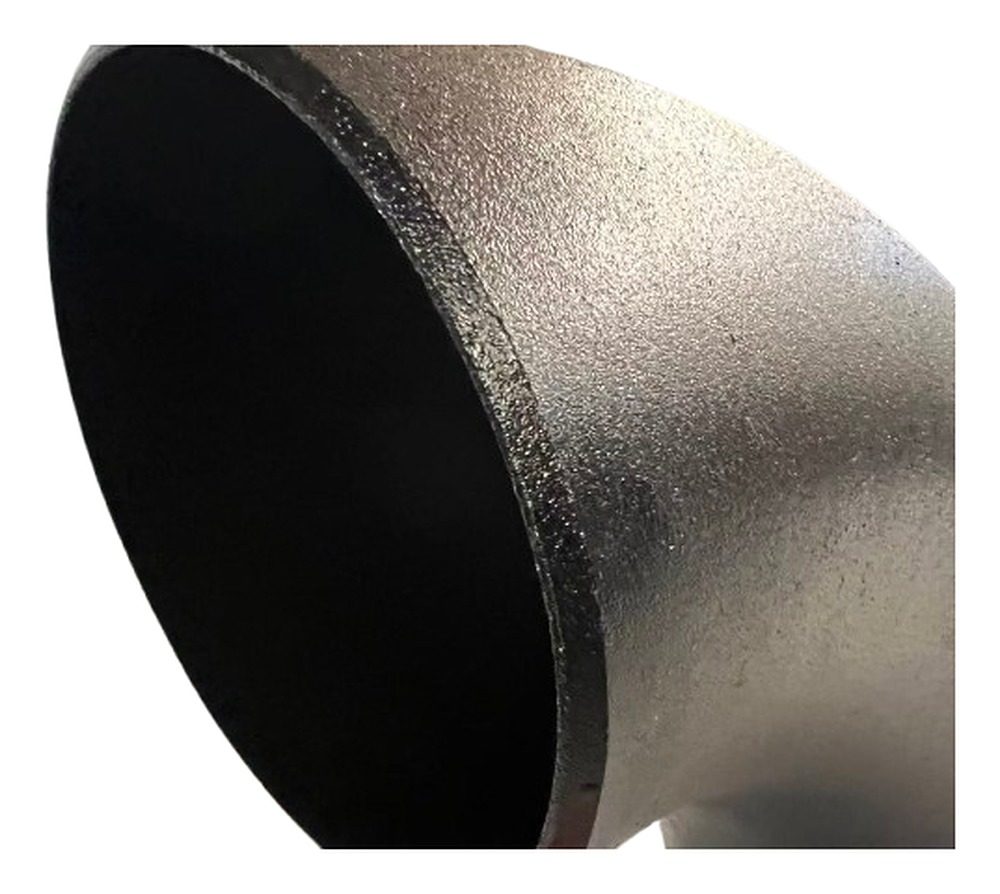
| End preparation | Bevelled to ASME B16.25 |
| Manufacturing | Seamless, hot formed, as standard up to NPS 24; welded construction for larger sizes |
| Heat treatment | Per ASTM A234 WPB — normalised, normalised and tempered, or stress relieved, as specified |
| Surface | Black as standard; shot blasted, oiled or painted on request |
| Certification | EN 10204 3.1 material test certificate, traceable to heat number |
| Lead time | Standard sizes in regular material take 7-15 days; non-standard sizes, non-standard schedules and special requirements take 20-35 days. Sea freight to the Gulf is additional and depends on the destination port. Lead time is confirmed in writing with your quotation and is subject to the production schedule at the time of order. |
| HS code | 7307.93 |
Applications
- Process piping in refineries and petrochemical plants, where a line has to turn and stay full bore
- Oil and gas gathering and transmission lines
- Steam, condensate and cooling water lines in power plants
- Seawater intake and desalination plants, with material and coating confirmed for the service
- Firewater rings and utility headers
- General industrial pipework where the specification calls for a welded joint rather than a flanged one
- EPC contractors and overseas infrastructure projects — water transmission mains, district cooling networks, airport and industrial park piping, supplied to the project specification and the document package your QA team requires
Samples, Third-Party Inspection and Test Records
Sample pieces can be produced before the batch runs, so that dimensions, bevel profile and fit-up can be checked on your side first. Sample cost and delivery time are advised with the quotation, based on size and material.
Buyer-nominated inspection is supported. SGS, BV, Intertek or your own inspector can witness dimensional checking, marking, coating and container loading at the production site, and we provide the documents and site access needed for the visit. Where a visit is not practical, the same checks can be followed through a live video walkthrough. Third-party inspection fees are normally carried by the buyer.
Non-destructive testing and hydrostatic test records are available on request and can be shipped with the order, together with the EN 10204 3.1 material certificate, the heat number and marking list, dimensional records, packing list and certificate of origin. Tell us at enquiry stage which records your project requires, and they are included in the quotation.
Long Radius or Short Radius
Long radius (LR) Short radius (SR)
Centerline radius 1.5 × NPS 1.0 × NPS
Standard ASME B16.9 ASME B16.28
Pressure drop Lower Higher
Erosion at the turn Less More
Space required More Less
Typical use Process lines, slurry, high velocity Tight pipe racks, low velocity, utilities
If the line carries an abrasive or high-velocity fluid, long radius is the safer choice. If the elbow has to fit a tight rack, short radius solves the layout, but expect more pressure drop and more wear at the turn.
For a shallower turn, see 45 degree elbows. For a U-shaped run, see 180 degree return bends.
FAQ
Q1: Do 90 degree elbows have a pressure class like flanges do?
No. Butt weld fittings do not carry a Class rating. The pressure capability comes from the pipe schedule, the material and the applicable piping code. State the schedule and the design code when you enquire, and we will confirm the fitting matches the line.
Q2: How is the wall thickness of a 90 degree elbow specified?
By pipe schedule, matched to the connecting pipe. Common schedules are SCH 40, SCH 80, SCH 160, XS and XXS. There is no separate thickness table for the elbow — the bore and the wall follow the pipe.
Q3: Long radius or short radius — which one should I order?
Long radius (1.5 × NPS) for process lines, high velocity, slurry or any service where erosion matters. Short radius (1.0 × NPS) when space is the constraint and the fluid is low velocity and non-abrasive.
Q4: Are short radius elbows available in large sizes?
Short radius elbows to ASME B16.28 are commonly supplied in the standard size range; availability in the larger sizes should be confirmed at quotation stage. Sizes above NPS 24 are normally supplied in welded construction.
Q5: Does radiographic testing (RT) apply to a seamless elbow?
A seamless elbow has no seam weld in the body, so RT on the fitting body has nothing to find. NDT normally covers the bevelled ends by MT or PT, and dimensional and visual checks to the standard. RT applies to the girth welds made on site, and to elbows supplied in welded construction.
Q6: What standard are the ends bevelled to?
ASME B16.25, which covers the bevel angle, the root face and the land. If your weld procedure calls for a different bevel, send the detail with the enquiry.
Q7: Does forming thin the wall of the elbow?
Yes, and it is expected. The outer radius of the bend is stretched during forming and ends up thinner than the starting pipe. ASME B16.9 governs the minimum wall after forming, which is why the schedule at the enquiry stage should be chosen with the forming allowance in mind.
Q8: Can a carbon steel elbow be used in sour service (H2S)?
Carbon steel to ASTM A234 WPB is not automatically acceptable for sour service. Where H2S is present, the material, hardness and heat treatment have to be confirmed against the applicable requirement, such as NACE MR0175 / ISO 15156. Tell us the service and we will confirm what can be supplied.
Q9: Can you supply a non-standard angle, such as 60 or 30 degrees?
Angles outside the standard ones are made to order from your drawing. Send the angle, size, schedule and radius, and the item will be quoted as a custom fabrication.
Q10: What does the EN 10204 3.1 certificate show?
The heat number, the chemical analysis, the mechanical properties, the heat treatment condition and the dimensions inspected. Every fitting is marked with the heat number, so a certificate can be traced back to the piece in your hand.
Q11: What sizes and pressure ratings are available for 90 degree butt weld elbows?
NPS 1/2 inch to 24 inch as standard in seamless construction, with larger sizes in welded construction on request. Wall thickness is specified by pipe schedule. Sizes and ratings outside this range can be reviewed against your drawing. The exact range confirmed for your order is stated in the quotation.
Q12: How is the wall thickness determined for 90 degree butt weld elbows?
Butt-weld fittings do not carry a pressure class. Wall thickness is specified by the pipe schedule (SCH 10 / 20 / 40 / 80 / 120 / 160 / XS / XXS), and the schedule must be stated when you request a quotation.
Q13: What is the lead time for 90 degree butt weld elbows?
Standard sizes in regular material normally take 7-15 days. Non-standard sizes, special materials and custom orders take longer. The exact lead time for this product is given in the specification table on this page and is confirmed in writing with your quotation. Sea freight to the Gulf is additional and depends on the destination port. All lead times are subject to the production schedule at the time of order.
Q14: Is there a minimum order quantity for 90 degree butt weld elbows?
There is no fixed minimum. Standard items can ship from a single pallet, and custom production is normally quoted at full container load. Small trial orders and mixed-size orders are accepted. Send your size list and we will confirm what can be combined in one shipment.
Q15: How are 90 degree butt weld elbows packed and marked?
Flanges and fittings are packed in plywood cases or on plywood pallets with anti-rust treatment, strapped and stretch-wrapped for sea freight. Each piece carries the heat number, and the material, size, standard and pressure class or schedule are marked on the item or on the case label. Shipping marks are printed to your specification, and a fumigation certificate is provided where wooden packaging is used.
Q16: Can you produce 90 degree butt weld elbows to our drawing or to non-standard specifications?
Yes. Send the drawing, material, quantity and the applicable standard, and we will confirm feasibility and quote. Non-standard angles, non-standard schedules, special materials and special dimensions are produced against your drawing. The details we need to quote are listed on our custom service page. The details we need to quote are listed on our custom service page.
Engineer’s Note
Four things decide whether a 90 degree elbow performs on site.
Radius and erosion. Erosion and pressure drop concentrate at the outer radius of the turn. On lines carrying abrasive or two-phase flow, long radius is not a preference, it is the difference between a fitting that lasts and one that thins out early.
Wall thickness after forming. The outer radius is thinner than the nominal pipe wall after forming. The allowance is governed by ASME B16.9, but the schedule should be selected knowing this, not after it.
Elbow or bend. A fitting with a centerline radius of 1.5 × NPS or 1.0 × NPS is a standard elbow to B16.9 or B16.28. A larger radius — 3D, 5D — is a bend, made to a different standard or to your drawing, and it is priced as a custom item, not as a catalogue elbow.
Weld placement. The girth welds sit on the straight tangents at each end, not on the bend itself. Keeping welds off the curve is what keeps the repair rate down over the life of the line.
Enquiry
Send the size, the schedule, the radius (LR or SR), the quantity and the service. A drawing or a line list works just as well. We usually quote within 24 hours.
Frequently Asked Questions
Do 90 degree elbows have a pressure class like flanges do?
No. Butt weld fittings do not carry a Class rating. The pressure capability comes from the pipe schedule, the material and the applicable piping code. State the schedule and the design code when you enquire, and we will confirm the fitting matches the line.
How is the wall thickness of a 90 degree elbow specified?
By pipe schedule, matched to the connecting pipe. Common schedules are SCH 40, SCH 80, SCH 160, XS and XXS. There is no separate thickness table for the elbow: the bore and the wall follow the pipe.
Long radius or short radius — which one should I order?
Long radius (1.5 x NPS) for process lines, high velocity, slurry or any service where erosion matters. Short radius (1.0 x NPS) when space is the constraint and the fluid is low velocity and non-abrasive.
Are short radius elbows available in large sizes?
Short radius elbows to ASME B16.28 are commonly supplied in the standard size range; availability in the larger sizes should be confirmed at quotation stage. Sizes above NPS 24 are normally supplied in welded construction.
Does radiographic testing (RT) apply to a seamless elbow?
A seamless elbow has no seam weld in the body, so RT on the fitting body has nothing to find. NDT normally covers the bevelled ends by MT or PT, plus dimensional and visual checks to the standard. RT applies to the girth welds made on site, and to elbows supplied in welded construction.
What standard are the ends bevelled to?
ASME B16.25, which covers the bevel angle, the root face and the land. If your weld procedure calls for a different bevel, send the detail with the enquiry.
Does forming thin the wall of the elbow?
Yes, and it is expected. The outer radius of the bend is stretched during forming and ends up thinner than the starting pipe. ASME B16.9 governs the minimum wall after forming, which is why the schedule should be chosen at enquiry stage with the forming allowance in mind.
Can a carbon steel elbow be used in sour service (H2S)?
Carbon steel to ASTM A234 WPB is not automatically acceptable for sour service. Where H2S is present, the material, hardness and heat treatment have to be confirmed against the applicable requirement, such as NACE MR0175 / ISO 15156. Tell us the service and we will confirm what can be supplied.
Can you supply a non-standard angle, such as 60 or 30 degrees?
Angles outside the standard ones are made to order from your drawing. Send the angle, size, schedule and radius, and the item will be quoted as a custom fabrication.
What does the EN 10204 3.1 certificate show?
The heat number, the chemical analysis, the mechanical properties, the heat treatment condition and the dimensions inspected. Every fitting is marked with the heat number, so a certificate can be traced back to the piece in your hand.
What sizes and pressure ratings are available for 90 degree butt weld elbows?
NPS 1/2 inch to 24 inch as standard in seamless construction, with larger sizes in welded construction on request. Wall thickness is specified by pipe schedule. Sizes and ratings outside this range can be reviewed against your drawing. The exact range confirmed for your order is stated in the quotation.
How is the wall thickness determined for 90 degree butt weld elbows?
Butt-weld fittings do not carry a pressure class. Wall thickness is specified by the pipe schedule (SCH 10 / 20 / 40 / 80 / 120 / 160 / XS / XXS), and the schedule must be stated when you request a quotation.
What is the lead time for 90 degree butt weld elbows?
Standard sizes in regular material normally take 7-15 days. Non-standard sizes, special materials and custom orders take longer. The exact lead time for this product is given in the specification table on this page and is confirmed in writing with your quotation. Sea freight to the Gulf is additional and depends on the destination port. All lead times are subject to the production schedule at the time of order.
Is there a minimum order quantity for 90 degree butt weld elbows?
There is no fixed minimum. Standard items can ship from a single pallet, and custom production is normally quoted at full container load. Small trial orders and mixed-size orders are accepted. Send your size list and we will confirm what can be combined in one shipment.
How are 90 degree butt weld elbows packed and marked?
Flanges and fittings are packed in plywood cases or on plywood pallets with anti-rust treatment, strapped and stretch-wrapped for sea freight. Each piece carries the heat number, and the material, size, standard and pressure class or schedule are marked on the item or on the case label. Shipping marks are printed to your specification, and a fumigation certificate is provided where wooden packaging is used.
Can you produce 90 degree butt weld elbows to our drawing or to non-standard specifications?
Yes. Send the drawing, material, quantity and the applicable standard, and we will confirm feasibility and quote. Non-standard angles, non-standard schedules, special materials and special dimensions are produced against your drawing. The details we need to quote are listed on our custom service page.
Related products
- 45° butt weld elbows
- 180° return bends
- carbon steel butt weld tees
- EN 10204 3.1 material certificate
- ASTM A234 WPB elbows