
Seawater is the hardest service a piping system meets in the Gulf. Chloride content, dissolved oxygen, flow velocity and temperature act together, and the failure mode is almost always pitting or chloride stress corrosion cracking rather than general wastage. Two material choices fail in this environment for two different reasons, and both failures are common on desalination and cooling water projects.
Carbon steel fails by corrosion. Coated and lined carbon steel is used on seawater intake and outfall lines, but the coating is a wear item and the first holiday in it becomes a pit.
Type 316L fails by pitting. It is sometimes tolerated in fast-flowing, cool, well-aerated seawater, but the crevice under a gasket or a pipe support is a different environment from the open stream, and that is where it pits first. NORSOK M-001, the offshore material selection standard, does not list 316L among the grades it recommends for seawater piping. For this reason 316L is not a safe default for intake lines, standby lines, dead legs or intermittent service.
Duplex grades are the step above 316L, not a compromise between 316L and carbon steel. They carry roughly 50 percent ferrite and 50 percent austenite, which on 2205 gives about two and a half times the yield strength of the austenitic grades and a much higher resistance to chloride stress corrosion cracking.
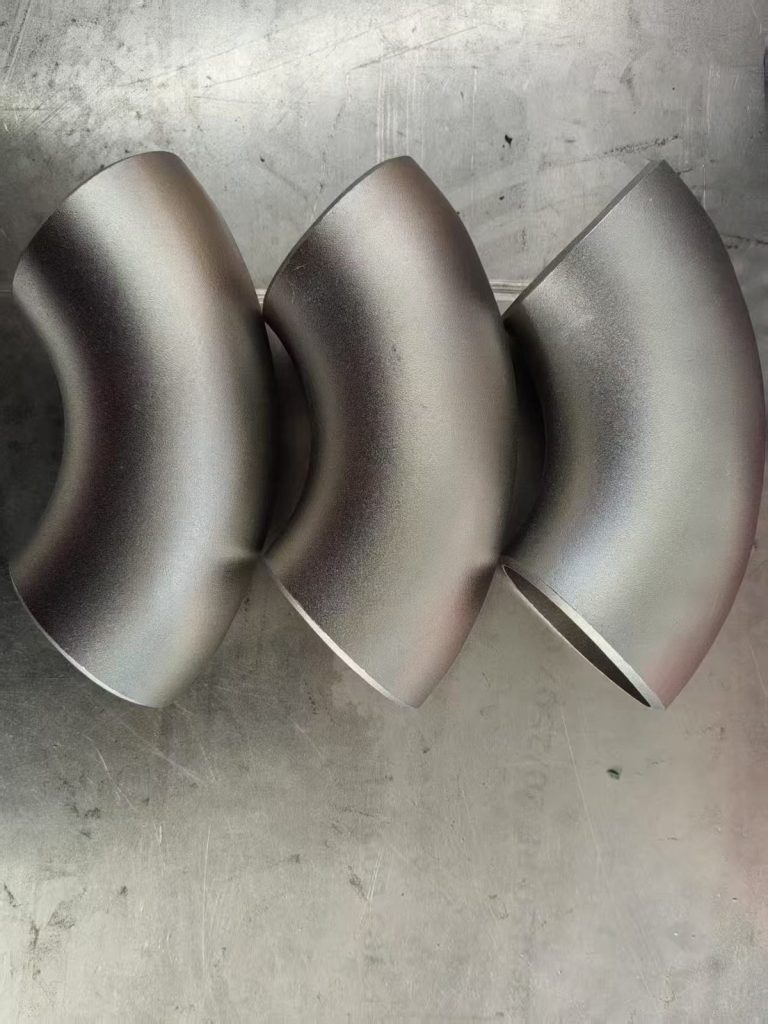
The four grades and where each one belongs
Resistance is ranked by the pitting resistance equivalent number, calculated as PREN = Cr + 3.3 Mo + 16 N. The higher the figure, the more chloride the steel will tolerate before pitting starts. Type 316L comes out at about 25, 2205 at about 35 and 2507 at about 42, and that spread is the whole argument for the upgrade.
| Grade | UNS | Common name | PREN | Min yield | Where it is used |
|---|---|---|---|---|---|
| 2304 | S32304 | Lean duplex | about 26 | 400 MPa | Low chloride, budget-driven sections; replaces 316L where chlorides are mild |
| 2205 | S31803 / S32205 | Duplex | about 34–35 | 450 MPa | Pretreatment, filtration, low pressure RO feed, cooling water |
| 2507 | S32750 | Super duplex | about 42 | 550 MPa | High pressure RO feed, brine, high velocity and high chloride sections |
| Zeron 100 | S32760 | Super duplex with Cu and W | about 42 | 550 MPa | Seawater plus dilute acid or H2S; sour service subject to ISO 15156 assessment |
A common arrangement on a desalination project puts 2205 on the intake, pretreatment and low pressure side, and 2507 from the high pressure pump through the membrane feed and the brine discharge. The boundary is set by the project specification, not by the supplier, and it should be read from the line list rather than assumed.
One note on 2205: S31803 and S32205 are both sold as 2205. S32205 is the compositional refinement with a tighter range on chromium, molybdenum and nitrogen, and it is now the grade most commonly specified. This is not cosmetic. A heat of S31803 sitting at the bottom of every range can calculate to a PREN near 30, well below the 35 that seawater specifications commonly set as a minimum. An S32205 heat normally clears that figure, but the margin comes from the actual composition rather than from the name 2205, so the calculation should be done on the certificate values. If the specification says S31803, confirm with the mill whether S32205 will be supplied as an equivalent, because the certificate has to state the UNS number that was actually made.
A815 is not A403
This is the point where enquiries most often go wrong.
Butt-weld fittings in austenitic stainless steel are made to ASTM A403, and the grades read WP304, WP304L, WP316, WP316L. Butt-weld fittings in duplex and super duplex are made to a different standard, ASTM A815, and the grades read WPS31803, WPS32205, WPS32750 and WPS32760.
The two standards share the same product forms and similar grade designations, which is why they look interchangeable. They are not: the material categories and the heat treatment requirements behind them differ. A403 does not cover duplex grades. An enquiry written as “A403 WPS32750” cannot be certified, and a supplier who quotes against it will either return a certificate that does not match the purchase order or substitute a different grade without saying so.
The correct pairing for a duplex seawater line is:
| Item | Standard | Grade |
|---|---|---|
| Flanges | ASTM A182 | F51 (S31803), F60 (S32205), F53 (S32750), F55 (S32760) |
| Butt-weld fittings | ASTM A815 | WPS31803, WPS32205, WPS32750, WPS32760 |
| Pipe | ASTM A790 / A928 | S31803, S32205, S32750 |
F51 and F60 are the same trap in the flange grade. Both are sold as 2205, but F51 is certified to S31803 and F60 to S32205. A line list that calls for S32205 needs a flange certified F60; a certificate reading F51 against an S32205 line is a mismatch, however good the steel is.
Note also that the flange and the fitting are two different standards and therefore two different certificates. A package quoting one certificate for both is worth questioning: the flange is a forging certified to A182, the fitting is a wrought product certified to A815.
What the 3.1 certificate has to show
EN 10204 Type 3.1 is expected as standard on these projects, but the usual composition and mechanical results are not enough on duplex. Three further items are worth checking on the certificate, and they should be named in the enquiry so that the mill knows they are required.
The first is the actual UNS number, not just the common name. “2205” on a certificate means little on its own; S31803 and S32205 are different compositions with different minimum alloy content.
The second is ferrite content. It is a routine acceptance item on duplex fittings, commonly 40 to 60 percent by volume, measured by metallography to ASTM E562 or by an agreed magnetic method; the figure to work to is the one stated in the project specification. Too little ferrite reduces strength and stress corrosion resistance; too much reduces toughness. An improper solution anneal is the usual cause, and it is one of the most common reasons a duplex fitting fails inspection.
The third is the corrosion test. ASTM A923 and ASTM G48 are test methods rather than certificate items: whether either applies, which one, the acceptance criteria and the testing frequency all come from the project specification or the purchase order. The same holds for Charpy impact values at minus 40 degrees Celsius. A Type 3.1 certificate does not carry these tests unless they were ordered.
Solution annealing is mandatory on duplex, and cooling after it has to be rapid; air cooling is not sufficient. S32205 is annealed between 1021 and 1099 degrees Celsius and S32750 between 1027 and 1127 degrees Celsius, both followed by rapid cooling. A fitting that was slow cooled carries intermetallic phases that re-testing will not remove. Where the specification permits it, re-solution annealing and re-quenching correct the condition, and the fitting then has to be re-inspected in full, so the heat treatment record is worth asking for before the goods ship rather than after.
What to put on the enquiry
Five items, and the quotation comes back comparable:
- The line or tag number for each size, so the grade can be matched to the service segment.
- The UNS number as well as the common name.
- The ASTM standard for each item: A182 for flanges, A815 for fittings, A790 or A928 for pipe.
- The pressure class or schedule, and the facing for flanges.
- The certificate requirement, stated as EN 10204 3.1, with the ferrite and corrosion test results named.
A mixed enquiry covering carbon steel, 316L and duplex on one list is normal on these projects. Sending it as one list is fine, provided each line carries its own standard and grade, because the three groups follow different production routes and are certified separately.
Delivery
Duplex is not a stock item in the way carbon steel is. 2205 fittings in common sizes can sometimes be sourced from mill stock; super duplex grades and the larger sizes are normally made to order. Lead time should be quoted per grade rather than as one figure for the whole enquiry, because the duplex lines will set the date for the shipment.
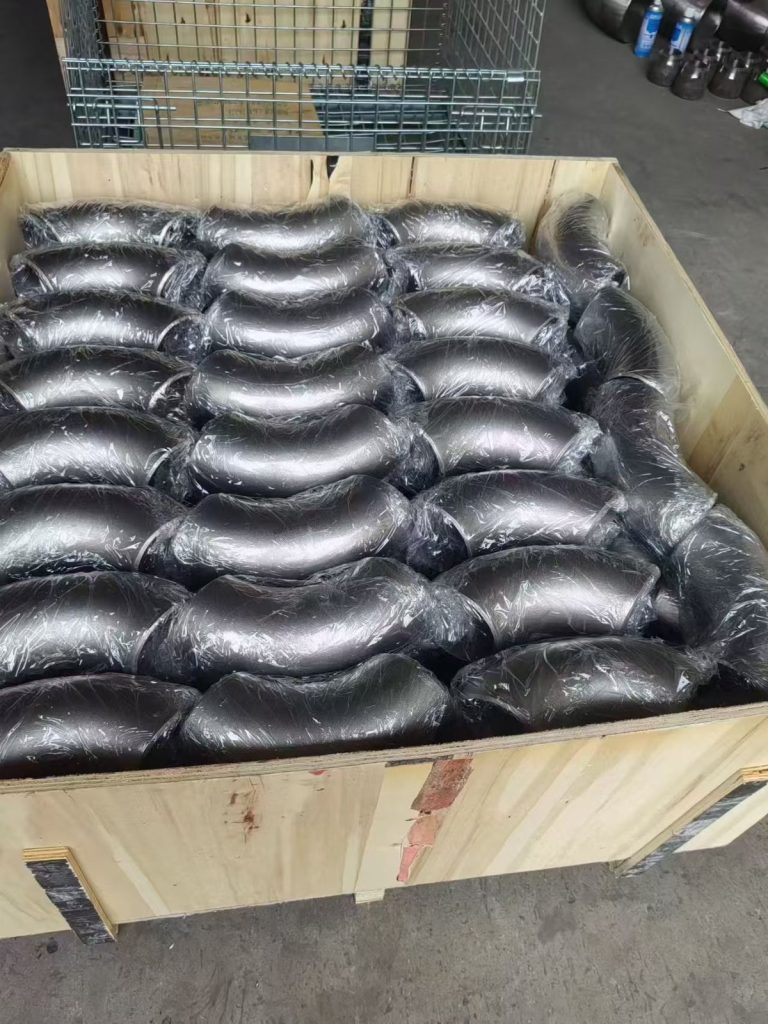
Send the line list with the grades marked and we will quote each group against its own standard, with the certificate scope stated on the quotation.